Showing posts with label Five Tenets. Show all posts

Thursday, April 2, 2020

The Chosun e-newsletter Archive Volume 11 #4 April, 2020

Dear Martial Arts Enthusiast, 

Welcome to the April 2020 edition and the 125th issue of the
Chosun Taekwondo Academy e-newsletter!


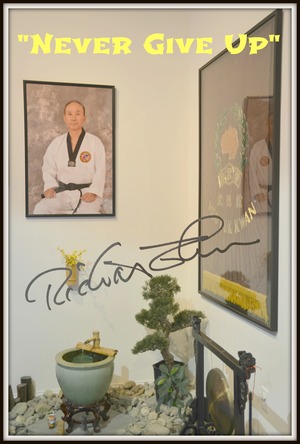
It is difficult to overstate what a difference a month makes! Life at CHOSUN has changed in ways we never thought imaginable. Just one day before the New York state mandate, on March 16th, in a direct response to the escalation of the impending COVID-19 health crisis, CHOSUN temporarily closed its doors. The next day, with the help of our IT developer, Mark Damia of Walling Road Design, CHOSUN was up and running for Live-Stream classes on the Zoom platform. The classes have been well attended and students are enthusiastic to train! We miss our students and DSC_9411enhinstructors dearly and will open the dojang doors the minute we can.This unprecedented situation effects all of us but together we will persevere with indomitable spirit... We are martial artists!
NEVER GIVE UP!


Happy Easter and Passover

View the 2019 Chosun Taekwondo Academy Video Retrospective 

Check out all upcoming CHOSUN events on the events page of the CHOSUN website!
Please visit the updated and improved CHOSUN Yelp page!  ReviewUsOnYelp
and CHOSUN on Instagram

 
Kamsahamnida,                                                                                  
                                                                
Patty Cook, Editor www.facebook.com/chosuntkd  download


 Chosun Taekwondo Academy celebrating 23 years!
Chosun Taekwondo Academy Newsletter celebrating 10 years!

Subscribe at: www.chosuntkd.com

Sunday, November 22, 2015

A Reflection of My Taekwondo Journey from the Perspective of a Brown Belt

by Sienna Lee

Taekwondo.  It’s not merely a hobby or a pastime, nor is it simply a sport.  Taekwondo is an art form: a way of life.  Over the course of my martial arts education, I’ve learned that fact.

              Everyone remembers what it was like in your first white belt class.  The “purest belt”, you were most likely intimidated by the other belts, staying quiet, doing as you’re told, and trying to absorb all of the wisdom and knowledge that you could in one enlightening
session.  However, one thing hasn’t changed since that first day in the dojang: you’ve never stopped learning.  By no means will you ever get to a point in your Taekwondo life where you sit back and say, ‘Ok. I’ve learned everything that there is to know about Taekwondo’.  No matter what dan you are, what belt…you will continue to learn.  Taekwondo is an
infinite teacher, and we are its eternal disciples. 
But do not let this discourage you, for even great masters are always perfecting a simple, yet at the same time, complex, middle punch.  This is what is so incredible about Taekwondo, it is a learning experience that can be a lifetime journey.   


              I never thought I would get to where I am today. On my first day as a Taekwondo student, I watched all the other pupils in awe, stunned by how coordinated and precise the dance-like moves were carried out.  I saw the other belts and thought, how will I ever get there? Will I be able to do it? Now, I see, that anything is possible when you have the right teachers, and the masters at Chosun Taekwondo Academy provide me with all the information and wisdom I need to become the best I can be.

         I remember when I was first being taught the basics of Taekwondo, one of the rudimentary things that you learn as a Taekwondo disciple is how to Kihap. When I was being instructed, the master very kindly told me to yell when I carry out a movement. “That’s called a Kihap. Eventually, you’ll get your own sound when you Kihap, but for now, it’s a yell to express strength.” When the master said that, I was thinking, “Wow. I’m going to get my own sound in Taekwondo”. For quite some time I thought  that one day I would Kihap in Taekwondo and a different new sound would come out. I now know that that was not what the master meant. What she meant, was not that I would one day sound different, but that one day I would achieve the confidence to yell as loudly and hard as I could, demonstrating my assertiveness in the art of Taekwondo. This progressive assurance in the craft makes it special.

              No matter who you are, how old you are, or where you are, Taekwondo is always there for you.  It is a universal art.  From the moment you remove your shoes to the time you put them back on; once you step into the dojang, you know you’re at home.  But do not be fooled, Taekwondo is not for everyone.  It takes courtesy, integrity, perseverance, self-control, and indomitable spirit, as stated in the Five Tenants of Taekwondo.  Let’s break these down, shall we?

Courtesy.  In other words, politeness.  Taekwondo is all about pride, and that comes with being polite and having respect towards others.  Remember, you represent your Taekwondo academy everywhere you go, so you want to be the best you can be, always.

Integrity. Having strong moral values and beliefs is important to be a good student at any Taekwondo academy.

Perseverance.  Rising through the ranks in Taekwondo doesn’t happen overnight.  It takes perseverance to stick with the art and not give up.

Self-control.  Taekwondo isn’t an excuse to go pick a fight with someone.  It shouldn’t be used to provoke an attack against anyone, self-control helps diffuse situations. 

Indomitable Spirit.  Tying in with perseverance, one must be brave, confident, and never give up.

              One of the best things about belonging to an academy or dojang, is that you’re never alone.  You will always have a family, you will always have someone there for you. To encourage, push, and test you to perform to the very best of your ability.  To see the other students train is an inspiration to me to train harder.  Whether I look to a white belt to observe how far I’ve come, or to a black belt to contemplate what I have to look forward to and work for, every student, Master, and Grandmaster inspires me.  This is what it’s like in the Taekwondo family, there is always someone to support you.

              When test day comes, a mixture of emotions punctures the air and creates a unique aura cloud floating above the heads of all the eager students. Anxious, nervous, excited, proud; adrenaline helps balance the uneven scale of feelings overtaking our already busy heads. When it finally comes to carry out our poomsae, perform our break…we’re ready. We know by heart what is expected of us, and this is evident by how we perform. There is no better feeling in the martial art of Taekwondo than knowing that you did your best and are rewarded with the esteemed promotion from belt to belt, dan to dan.                                                                                                        

         Looking back, I see that although I have learned a lot from the experienced masters at Chosun Taekwondo Academy, I still have much to learn. As long as I continue in Taekwondo, I will never stop learning. Each class brings new lessons on how to correctly carry out the art, acquiring new knowledge

         As a Brown Belt,  I look forward to being taught new techniques in Taekwondo. I hope to continue Taekwondo as long as possible, because I not only learn defensive techniques, but I also learn life skills that will help make me a successful person in the future.

         I’ve progressed a lot from that timid White Belt way back last November. 


Thursday, June 11, 2015

The Meaning of Perseverance in Taekowndo

by Chosun Student Dr. Herb Green
Belt Promotion Essay May 17, 2015

      Miriam Webster’s dictionary defines perseverance as “the quality that allows someone to continue trying to do something even though it is difficult: continued effort to do or achieve something despite difficulties, failure, or opposition.”  
My life has been, at times, an awkward balance between perseverance and complacency.  I remember in my senior year at High School how I would cut classes because I was bored and defiant, not to mention that you had to be there at 6:37 in the morning. But, on a memorable winter morning, in the midst of a blizzard, I knew what I had to do—get to school.  And I did, somehow trudging my way through the streets for 2 miles until I arrived. I felt exhilarated.  That is the feeling I get with Taekwondo!
     What does it mean to me to persevere in Taekwondo?  It means doing the small things in warm-up like trying to stretch just a little bit further than the last time, reaching for my toes. It means going to classes, even when it would be easier to stay at home, particularly on a bitterly cold winter day. I do hear that inner voice that you so poignantly described in one of your articles saying, “you’ve worked too hard today…miss this one class…it doesn’t matter.”   Oh, I’ve succumbed to this voice more times than I would like to admit.  Afterwards, on those occasions that I can recall, I felt bad:  empty, anxious and unsure.       
     On returning from our 2014 training tour in Korea, I promptly wrenched my back, herniating another lumbar disc, developing weakness in my left leg. My neurosurgeon said I was through. No longer would I have to concern myself with proper form and technique in Poomsaes or Basic Motions #1. Ashamedly, I thought “Ok, one less thing to worry about.” A sense of relief pervaded me.  Complacency had won out. That didn’t last for too long. As the days rolled into weeks, I would sneak a peek at my Dobok uniform and my yellow belt, and my eyes would fill with tears. I missed Taekwondo at Chosun. I needed to come back. I took lessons from a personal trainer, went to physical therapy, became stronger. With my wife Roberta at my side, my neurosurgeon surprisingly said, yes, I could return to Taekwondo.
Master Cook, by example and words, you have taught me and others how to persevere. This quality, deemed a core element by General Choi Hong-hi, makes for true pride.


Thursday, May 28, 2015

The Value of Traditional Taekwondo Training

by Chosun student Julie Cheshire
Belt Promotion Test essay - May 17, 2015

     Traditional taekwondo training focuses on self-defense and “the way” of living a life of virtue. It is in traditional taekwondo that my interest lies.  While I respect the competitive sport of Olympic Taekwondo, it is the traditional martial art that I seek for myself and my children.
      The traditional art includes il su siks and ho sin sools, essential self-defense movements. These are empowering moves that if studied, provide practical ways to save yourself and others from a violent attack. The mere knowledge of these moves provides confidence and power within.  This internal strength can be enough of a force to prevent an attack from happening in the first place.

      Internal strength results not only from knowledge of moves, but also in an understanding of “ki”. Ki development is another focus of traditional taekwondo that enables students to tap into and harvest their internal energy.  While this is a new concept for me, I have experience firsthand how using techniques to harvest its power enable me to perform my breaks successfully.
      It is this focus on the internal that attracted me to taekwondo in the first place. The five tenets provide virtues that will prepare my children to become successful and benevolent. For adults, revisiting the tenets helps focus our daily lives and provides the inner strength to incorporate them. The tenets are not merely recited, they are experienced and promoted through example and lessons at Chosun.  Newcomers are welcomed, patience is extended, and children are expected to treat each other kindly.  Many sports focus on character development, but one is hard pressed to find a sport that emphasizes character development to the same degree I have experienced at Chosun.  Athleticism is nothing without strong character.  In fact, it can be dangerous, especially when a student has become proficient in defense skills.
     Meditation is another traditional component that I find invaluable.  While I still feel like a newcomer to meditation, I have improved. Western cultures have begun embracing meditation for its benefits for health and mind.  Quieting the mind has never been an easy task for me.  My mind is awash with responsibilities and concerns.  Ironically, using time to quiet the mind is often more constructive than trying to get ahead (or catch up) with thoughts of productivity.
     Traditional and sport taekwondo are two separate but related practices, both worthy exercises. However, traditional taekwondo is the only one that meets my personal and parental goals. I have little interest in competitive sport. I find value in the focus on “the way” set forth by the guiding principles, ki development and meditation.  I find value in the empowerment that self defense furnishes. It is the traditional aspects of taekwondo that I value most.


Belt Promotion Test Essays by Young Chosun Students

Indomitable Spirit
by Chosun student, Aidan Morrison 
Chosun Belt Promotion Test May 17, 2015
     In Taekwondo, indomitable spirit grows in students as they move up through each belt level. The more forms and techniques and discipline a student learns, the more unconquerable they feel.
     When I earned by blue belt, I felt unconquerable because blue belt is the first
intermediate belt. At that point I knew I would make it to black belt. Having indomitable spirit lets a taekwondo student have perseverance.
In school I try to have indomitable spirit so I can persevere at schoolwork. When I grow up, indomitable spirit will help me be successful in going to a good college and getting a well-paying job that I really like. That is the meaning of indomitable spirit and how I apply it in my life.


The Meaning of Perseverance and How I Apply it in  my Life
by Chosun student, Gregory Saucedo 
Chosun Belt Promotion Test May 17, 2015
     An important tenet of taekwondo that I am learning to apply in my everyday life is perseverance. Perseverance means to never give up and to have a set of goals in mind that one wants to achieve. Without perseverance, one would not be able to overcome the everyday challenges that are present in life. Learning to persevere through challenges teaches us that we can achieve anything that is really important to us. Perseverance helps us continue to try to do something even though it may be very difficult at times. 
     Some examples of how I apply perseverance in my life include the following. In school, I am able to complete my schoolwork by focusing and setting goals that allow me to deal with my challenges. I have patience and I ask questions if I don't understand something. I study and work hard to maintain my excellent grades.  Most importantly, I always try to finish what I start.  I do not give up if something hard presents itself.
     At home, I practice playing my saxophone several times per week. Sometimes I would much rather go outside and play, but I try my best to focus on persevering so that I can become much better at playing my instrument. I also practice all the skills and techniques that I am learning during my Taekwondo classes. It takes much practice and determination as I know that at time goes by I may be faced with some challenges in improving my technique and applying everything that I have learned thus far. Through perseverance, however, I know I will continue to strive and achieve all of my goals.
     Perseverance is the path to success in life. As long as you are determined and willing to never give up you can achieve whatever you set your mind to do. My mom and dad always remind me that if you fall, you must get up and dust yourself off and try again. Once a person learns to persevere through hard times it only becomes easier to pick yourself up and become successful.

Tuesday, May 12, 2015

Chosun Black Belt Essays by Lisa Ehrenreich and Elissa Maynard

The Unbreakable Chain of Taekwondo Knowledge and Wisdom
Excerpt from 4th Dan Black Belt Essay by Lisa Ehrenreich
"From the moment I stepped in front of a class it felt good, it felt right, it felt like I had to do it - for myself, for the students, for Chosun and for the future of Taekwondo.   It was a huge responsibility but one I had to take on.  My goal as an instructor is not only to learn the entire curriculum (still working on that), and not just to teach good technique - but also to share how Taekwondo can become a metaphor for life at every turn. I want to share how the focus, patience and perseverance needed to execute a proper low block (ari maki), a knife hand (sonnal) or a front kick (ap chagi) can be the same focus, patience
Path to the Stone Buddha Golgulsa Temple
and 
perseverance needed to achieve all your greatest desires and dreams. I believe we must make a concerted effort in our lives to live in the present moment, which is really all we have.  So often our minds are reliving the past or contemplating the future.  Traditional Taekwondo allows us the practice of being fully present."


The Difference Between Practicing Martial Art and Martial Sport

Excerpt from 2nd Dan Black Belt Essay by Elissa Maynard

"By removing some of the dangers that self-defense driven Taekwondo training offers, sport Taekwondo produces fast, natural, reflexive movement by emphasizing speed, technique, and completion of techniques which can help in self-defense situations. In this controlled and competitive environment, the practitioner learns how to react in difficult unpredictable circumstances. These situations can prepare the martial artist for similar situations in real life and enable them to realize and expand their potential as martial artists.

It is important to understand that sport Taekwondo competition is not the same as a fight in the CVS parking lot but is closer to a combat situation than any other style of training. These benefits only hold true and are effective if the practitioner doesn't lose sight of the true goal, which unfortunately is most often the case. When that happens, winning and losing becomes too important and interferes with the training process. In addition, as a result of point driven competitions, techniques that are deemed “ineffective” are soon abandoned and the focus shifts to skills that can procure points. This is a major downfall to the sport side of Taekwondo because so many useful skills are left behind."

Friday, May 8, 2015

Youthful Defenders - Children and the Martial Arts

by Master Doug Cook
     September ushers in the cooling days of autumn and, along with it, the first few days of school for many youngsters across America. Subsequently, parents eager for their offspring to resume a structured routine following the dog days of summer frequently look to the martial arts for a solution. Of all the disciplines currently available to the public, taekwondo, the national Korean martial art and Olympic sport defined as “the way of defending with feet and hands”, is considered by many to be the most prevalent.[1] What is it about the art of taekwondo with schools found in strip malls and on street corners all over the nation that elevates it above other martial disciplines in offering a program genuinely capable of nurturing a child’s mind, body and spirit?
The Ultimate Demonstration of Respect
     Could it be that taekwondo contains empty-hand and foot techniques with proven effectiveness as an authentic means of self-defense? Or is it the philosophical aspects of the art that attract those seeking more than just a simple, physical workout for their children? Or, perhaps it is the fact that in a constellation of many martial disciplines, taekwondo shares the spotlight, along with judo, as being the only two recognized by the International Olympic Committee thus having the exclusive privilege of participating in the Olympic Games. Either way, it is clear that taekwondo has taken its place as the fastest growing, most popular martial art in the world today.  
     Certainly gymnastics, dance, wrestling and other sports played out on the gaming fields, coupled with a nutritious diet, will satisfy the aerobic and physiological requirements intended to build strong bodies in adolescents. Likewise, series like Odyssey of the Mind and academic clubs, along with similar programs, will clearly stimulate intellectual awareness and mental acuity. Moreover, leadership and life skills involving courtesy and compassion bolstered by self-esteem and confidence can be sparked by membership in various religious and secular groups such as the Boy and Girl Scouts. Yet can any of these worthy pursuits taken in isolation, or in tandem for that matter, truly be expected to instill essential qualities that benefit all aspects of a meaningful life and promising future? For many, the traditional form of taekwondo, if taught sincerely with integrity, will satisfy many of these desirable goals. Yet, how is it possible for a pursuit that superficially resonates with potential physical violence to meet these lofty expectations? And, if they so desire, how does one become involved?
     There are many martial arts schools in existence today; most very good, some outstanding and others, as with many ventures aggressively seeking commercial success, of questionable repute. So it is important for a parent to diligently examine the many possible options readily available. This is especially true with something as polemic as the martial arts where tactics clearly brutal in nature must be offset by honorable principles governing their use. Most martial ways or disciplines followed by the suffix “do” – taekwondo, tangsoodo, karate-do, aikido - adhere to this doctrine through the use of a moral code supported by an ethical philosophical foundation. If this model is to prove effective, however, then it is the responsibility of the instructor to present a balanced version of taekwondo when transmitting its virtues on to eager youngsters. Instructors then should be fairly scrutinized by concerned parents before any commitment is made. Similarly, it is wise to determine early on if competition or life enrichment and self-defense skill is a priority. Oddly, for various reasons, martial arts schools in general do not necessarily meet both criteria. If the parent is hoping to have their child develop a greater sense of discipline, self-control, compassion, perseverance and integrity for instance, then a school featuring a traditional taekwondo curriculum would be desirable. Conversely, if sport and physical fitness as a worthwhile pastime is the ultimate objective unhindered by academics, possibly as a replacement for baseball or football, then a martial arts school cultivating athletes rather than authentic martial artists should be considered. These establishments will focus on competitive, tournament preparation, forfeiting many defensive techniques forbidden in the ring due regulatory restrictions. Even though traditional taekwondo and sport taekwondo are considered two sides of the same coin so to speak, it is rare to find a school that treats both components simultaneously with the concentration they deserve.
     As indicators of a worthy curriculum, any taekwondo class should commence with a brief period of meditation, allowing youngsters ample time to wind down the mental chatter after a challenging day at school. The practice of meditation fosters a tranquil mind capable of increased awareness and can be applied in all aspects of the student’s life where supreme focus is required. It is a time to express what is referred to as the horse mind, the serious, disciplined state of mind as opposed to the playful, carefree monkey mind. Meditative practice is frequently followed by flexibility exercises and calisthenics in preparation for the rigorous kicking, blocking and striking routines that are unique to taekwondo. These individual techniques represent the vital tools of self-defense and are ultimately strung together into patterns known as poomsae – a series of formalized movements intended to repel imaginary opponents attacking from various directions. Poomsae practice lies at the core of the traditional taekwondo syllabus permitting the student to practice coherent defensive strategies in a safe yet dynamic manner. Training is rounded out with drills aimed at deflecting offending strikes and diffusing an assortment of grabs coupled with light or no-contact sparring where students express free-style proficiency within the confines of traditional technique.
     As described, the traditional taekwondo curriculum instills respect, discipline and self-control in adolescents through an appreciation for the implied danger associated with martial arts technique and a pronounced deference towards senior belts, instructors and, by extension, parents and elders. It imbues practical self-defense skill urging students of whatever age to walk life’s path with confidence, heedful of but unhindered by its daily perils. Moreover, from meditation, children learn to cultivate a spiritually tranquil mind in stressful situations. Finally, a familiarity with Asian philosophy and culture in conjunction with a working knowledge with the vocabulary of taekwondo technique in Korean, its native tongue, adds a crucial academic element to physical training.
     In short, the practice of traditional taekwondo promotes excellence and a healthy balance between mind, body and spirit – the holistic triad of human experience – in adolescents willing to strive for nobility. For parents with insight seeking to develop courtesy, integrity, perseverance, self-control and indomitable will in their children, there is no better vehicle. But the thoughtful parent must be patient and seek wisely; choose a school that is certain to meet your expectations since, once involved, traditional taekwondo is a extraordinary discipline that can last a lifetime.           


Master Doug Cook, a 6th dan black belt, is head instructor of the Chosun Taekwondo Academy located in Warwick, New York, a senior student of Grandmaster Richard Chun, and author of four best-selling books entitled: Taekwondo…Ancient Wisdom for the Modern WarriorTraditional Taekwondo - Core Techniques, History and PhilosophyTaekwondo–A Path to Excellence, and Taekwondo Black Belt Poomsae - Original Koryo and Koryo co-authored with Grandmaster Richard Chun, all published by YMAA Publication Center, Inc. He can be reached for lectures, seminars or questions at www.chosuntkd.com or info@chosuntkd.com.


[1] http://wiki.answers.com/Q/What_is_the_most_popular_martial_art

Thursday, April 23, 2015

The Concept of DO - A Way of Life

by Master Doug Cook

Tae Kwon Do: “Foot, Hand, Way”, or the “art of smashing with hands and feet”; three simple words representing a universe of power. Certainly, the consequences of striking with feet, tae, and hands, kwon, are clear. However, to underestimate the significance of the last syllable, do, due to its grammatical positioning within the root word tae kwon do, is to admit to a profound ignorance in this diverse, holistic discipline. To subtract this suffix entirely is to remove the heart and soul of the art, transforming it, instead, into a mere pugilistic pursuit; a hollow, physical exercise rather than an organic philosophy complete with a ritualized set of moral principles.                      
Pronounced “dough”, this simple two-letter declaration above all symbolizes the spiritual, intellectual and ethical dimensions manifest in the traditional Korean martial art of tae kwon do. Literally translated, do is The Way or Path every martial artist must travel. It is the essence and standard against which all practical and theoretical technique is measured. It is the level we must seek; the ideal we embrace. It is a continuum the sincere practitioner will visit time and time again with never any hope of reaching an end. It is a work constantly in progress. Sang Kyu Shim put this journey into perspective when he wrote: “One must not confuse the skills of living with the Way of living. The martial arts point the way while providing the skills to follow the Way. This is the road to creative change, a road of encounter and discovery. It is the road of a million miles that begins with the first step.”
Bulguksa Temple, South Korea

 While it is true that the term taekwondo itself is only a few short decades old, the fact remains that the art we are presently familiar with resonates with philosophical overtones gleaned from a mixture of traditional fighting styles rooted deep in Korean history. One cannot help but appreciate this virtue while visiting the temples and monuments built to memorialize legendary figures such as the Hwarang-do. Still, there are those today who assert that tae kwon do has no true heritage, that it is nothing more than a competitive sport; a bastard child of Japanese karate or Chinese gungfu. These are the few who would remain rooted in the stands cheering on contestants rather than recognize the virtue in champions of the heart. Forgotten are the centuries of invasion and imperialism during which the Korean people have had to defend the sovereignty of the tiny nation with the blood of their young warriors while nurturing a robust code of honor in the process. This courage is evident in every technique of the national, Korean martial art.                                           
The contemporary model of do partially stems from a desire expressed by noted masters of the past to transform their traditional martial arts skills, no longer as relevant in times of peace, into martial ways. Simply put, a martial way distinguishes itself from a battle art in that the ultimate goal is not necessarily one of combat preparedness so much as it is in discovering a method or means to achieve personal excellence through a practice of the martial arts accompanied by their implied codes of honor. By way of example, tae kwon do, tang soo do, karate do, aikido and judo are all offspring of fighting systems used primarily for the purpose of subduing an adversary in battle and expanded upon by their innovators in modern times to include a roadmap for ethical living. Men such as General Choi Hong-Hi, Hwang Kee, Gichen Funakoshi, Morihei Uyeshiba and Jigoro Kano appreciated the value of elevating their defensive skills, already steeped in ancient ethical philosophies, into still usable disciplines intended to instill defensive strategy, confidence and morality in society at large. Consequently, tens of millions of practitioners worldwide study some form of martial art in an effort to fortify their physical, mental and spiritual capabilities while becoming proficient in a form of self-defense. Practitioners of tae kwon do further support this model by striving to live a balanced life using the Five Tenets as a moral compass. These five ethical directives, as described in a previous column, consist of Courtesy, Integrity, Perseverance, Self-control and Indomitable Spirit; virtues the Korean citizenry at large have had to rely on, particularly during the twentieth century, in rising from the ashes of war to their present state of economical development. Tae kwon do, being a product of this will to survive coupled with a need to reaffirm a national identity on the heels of Japanese occupation, has served as a platform for the cultivation of do.                                                        
Taking a utilitarian approach to the basic theme underscoring The Way can have a significant effect on the practical application of tae kwon do technique in general. For example, the very basis of martial arts movement, now and in the past, can be traced to the observation and mimicry of nature. Therefore, one must concede that nature is embraced by do. Many of the more advanced strikes and stances such as tiger mouth (kumsohn) and cat stance (poom sogi), derive their very names from a flirtation with the defensive tactics seen in the animal kingdom. Likewise, the method of wrist rotation found in the execution of the middle punch (momtang jirugi) while in horse stance (jachoom sogi), replicates the revolution of the planets as described in the principles of celestial mechanics; a truly grand manifestation of The Way. Furthermore, Taeguek series poomse, the choreographed forms that stand as the central pillar of WTF-style tae kwon do, are rich in an abundance of natural metaphor. Borrowing heavily from the ancient, Asian classic, the I Ching, these essential patterns draw their philosophical individualism from the palgwe whose eight sets of trigrams represent nature in its fullness. The virtues of thunder, wind, water, fire and earth are all in evidence as the practitioner learns to overcome the physical limitations of the body, instead experiencing the spiritual aspects of The Way while performing this form of moving meditation. Natural harmony, too, should be evident in the execution of all techniques as it applies to the human anatomy. By practicing within the constraints of the body’s natural range of motion, stress and injury will be brought to a minimum. Likewise, permitting the muscles to remain in a relaxed and natural state will result in the development of explosive power upon impact. Consequently, since The Way is all encompassing in its relationship to physiology, natural movement equates to do. Clearly, from the early stages of social development on up to the present, an understanding of do has been accompanied by a deep appreciation of nature. In fact, one cannot exist without the other.     
The Way, then, is unmistakably paved by virtuous thought and action. It is arrived at through diligent practice and a never ending commitment to excellence. To waver is an admission of one’s humanity. To reclaim the rightful path, however, is a sure sign of discipline and commitment. In the words of the Zen patriarch, Bodhidharma: “All know the Way; few actually walk it.” As we advance in the martial arts our sense of balance, both physically and spiritually, begins to increase. Better health ensues. Reflexes are sharpened and a profound appreciation for the value of life pervades our being. Finally, we are rewarded with increased confidence and self-respect through our knowledge of self-defense. This course is a journey marked by many mileposts. It is a highway whose unbroken line leads to the philosophical and spiritual refinement of the individual. With each new revelation the practitioner comes closer to the ultimate goal of enlightenment. This journey, this road is called tae kwon do and it is defined by its simple, two letter suffix, do.  

Master Doug Cook, a 6th dan black belt, is head instructor of the Chosun Taekwondo Academy located in Warwick, New York, a student of Grandmaster Richard Chun, and author of the best-selling books entitled: Taekwondo…Ancient Wisdom for the Modern Warrior, Traditional Taekwondo…Core Techniques, History and Philosophy, Taekwondo... A Path to Excellence and Taekwondo Black Belt Poomsae...Original Koryo and Koryo co-authored with Grandmaster Richard Chun published by YMAA Publications Center, Inc. He can be reached for discussions or seminars at chosuntkd@yahoo.com or www.chosuntkd.com.

Article originally published in Taekwondo Times magazine Traditions column 
October, 2002


Friday, March 20, 2015

The Meaning of Indomitable Spirit

Bulguksa Temple

by Harrison Gratzel 
age 7 Blue Belt Essay
The meaning of Indomitable Spirit is having a strong and unbeatable spirit. I think I am strong inside myself.
I apply an Indomitable Spirit in my life by beating my fears. Having an unbeatable spirit makes me feel happy and confident. 
And also I think having an unbeatable spirit make our dreams come true. 
My Indomitable Spirit keeps me cook and awesome

Persevering in Taekwondo

by Taylor DiMeglio
Green Belt Essay
Time passes swiftly, as it often does. My white belt has turned yellow, then orange. Soon it will be green... taekwondo an ever-shifting landscape. Kicho forms bring Taeguks, Palgwe Il Jang arrives. Two forms become six, six defensive maneuvers now eighteen, nine Il Su Siks, nine Ho Sin Sools. New kicks, new stances, knife hand. An arsenal is building, a foundation laid. Im remindedchallenge is a steady stream. In taekwondo, you either focus or founder, and since the vista has widened and my desire grown, Im daunted.
Misty Mountains of South Korea

Im not a halfway person. What I want to do, I want to do all the way. Full vigor, nothing withheld. Yet, if I were an animal, Id be a donkey. Slow, plodding, standing stock still in the pasture, time lost to thought. Ive often wished for two lives, one to observe and ponder, the next one to live. A month to work on back stance, half a year to cultivate knife hand. Perfecting one technique, then another. Wholly impractical. Maybe Ill get another life, but, in the interest of assurance, its this one or bust.

Theres a part of me that would like to stay at orange belt. Even with a growing repertoire, Im securely in the beginners realm. Theres time enough for review; expectations are low. Praise comes easy. I know exactly where to stand in the line up. Spinning hook kick is around the corner, though. Expectations grow. As a greenhorn, I show potential. In time this may fall flat. Pretty kicks must gain in speed and power, a palm heel has to do more than land in the right place.

The demon of self-doubtis pernicious. My left knee twinges. You should have started ten years ago,this scathing voice intones. I stretch my toe too far in the wrong direction: Youre going to get hurt.When I pause to admire Miyamoto Musashi, up it pipes, You are not he.Id like to tell this self-satisfied inner specter a thing or two, but Im afraid it may be right. Ive started too late. First dan is reachable, but fourth dan? Beyond? I dont know.  I should quit. Ill never be the martial artist Id like to be, nor the one I might have been.

There is, however, a counter to the self-destructive voice. Perseverance is a primordial mandate, rooted in the indomitable spirit. Its embedded in our code. Everywhere we see and hear itinsistent voices, human souls longing to be known. Ubiquitous in human history, it is perseverance which has carried us forward from the very beginnings of civilization. Korea, too. In war after war, battle after battle, Koreans fought not only to survive but to thrive with their cultural identity intact, their country intent on industry, innovation, growth. Countless stories of courage and grief speak of their determination. They would not give up.

Versus will, discouragement is an unconvincing foe. More than anything, the human spirit wants to be. Always. Thus, when my self-doubt goes too far, latent fierceness rises up, my own indomitable spirit. Whos to say what I might have been, or what Ive yet to be? Shall I let unfulfilled fears be my guide? I havent ever; I wont start now. Even as I grow and age, I am still the young girl that I was. So long as my mind and body hold and my spirit is within, I will lay claim to that fiery girl. She is ever with me. I wont let her down.


Instead, I will practice, patience as well as technique. Palm heel today, knife hand tomorrow, the reverse next week. I will build todays progress into tomorrows mastery, take my lumps, and cherish victories as they come.

Thursday, October 2, 2014

Connecting the Dots - The Influence of Buddhism, Confucianism, and Taoism on Traditional Taekwondo by Master Doug Cook

Taekwondo represents many things to many people; but one thing that it is not is a religion. Although several masters may demand cult-like devotion more akin to faith-based institutions and require unreasonable, impractical and often dangerous techniques from their students, there is no real theological component to the national Korean martial art. Yet it would be disrespectful of history to ignore the reality that the three major philosophical paradigms of Buddhism, Confucianism and Taoism have had a significant influence on the ideology of traditional taekwondo. Consequently, while these three systems were never
meant to be deified by their founders, it is the ethical and metaphysical content that the martial artist distills from each and not the religious component. From the Ten Mental Educations recited at the end of a training session, to meditation, ki development and the respect paid to seniors, all the taekwondoist needs to do is connect the dots between the aforementioned practices and the Asian philosophical triad to gain a better understanding of their art.
Buddhism, first introduced to Korea from China in A.D. 372, encompasses the teachings of Siddhartha Gautama who came to be known as Buddha or the Enlightened One. The Buddhist canon consists of the Four Noble Truths, the Eightfold Path and in some cases, the tradition of Seon (Zen, Chan) or meditation. A cornerstone of this system is a belief that suffering arises as a direct result of desire. While Buddhism was practiced in ancient Korea during the Three Kingdoms and United Silla (A.D. 668-935) periods, it eventually evolved into the state religion of the Koryo Dynasty (A.D. 918-1392). Later, during the Chosun Dynasty (A.D. 1392-1910) when Confucianism ruled, the Righteous Monk movement played a vital role in repelling the Japanese invasion unleashed on Chosun in A.D. 1592.
Confucianism on the other hand, revolves around a blueprint rooted in ethical and philosophical principles developed by Kung-fu Tzu (551-479 B.C.) or in Western terms, Confucius. Encouraging exemplary moral behavior and communal endeavor, Confucianism dominated during the Chosun era, eclipsing Buddhism and championed scholastic achievement rather quotidian skills of warfare. Included in this philosophy was a hierarchal respect for elders and forbearers.
Last, but by no means least important, is the influence Taoism has exerted on the social fabric of Korean culture specifically, and thus traditional taekwondo in general. Noted for its focus on the relationship between humanity and the natural order of the Universe known as the Tao or the Way, Taoism is thought to have been established by Lao Tzu (570-490 B.C.) who, as legend has it, may be a name for a combination of individuals rather than a single man.
When we consider the connection between these three primordial Asian philosophies turned religions, a good place to start is with the Ten Mental Educations or the Student Creed of Taekwondo, which includes the following principles:

·       Be loyal to your country.
·       Be loving and show fidelity to parents.
·       Be loving between husband and wife.
·       Be cooperative between brothers and sisters.
·       Be faithful to your friends.
·       Be respectful to elders.
·       Establish trust between teacher and student.
·       Use good judgment before harming any living thing.
·       Never retreat in battle.
·       Always finish what you start.     

Upon close inspection, we find that the subsequent actions required by this code of moral behavior rest solidly in Confucianism’s camp. Filial piety, a deep respect for the wisdom cultivated by elders and the placement of  the welfare of the community above self, are all signifiers of the influence Confucianism has exercised not only on the dictates of traditional taekwondo, but, again, on Korean society at large. Just as we bow to upper belts in the dojang, it is not unusual in the homeland of taekwondo for juniors to readily assist seniors in any number of situations. Similarly, even though taekwondo is predominantly a physical art, the nurturing of the intellect through the study of technical nomenclature, Korean history as it relates to the native martial arts and a grasp of the rich philosophical underpinnings of taekwondo poomsae, all subscribe to Confucian ethics.
Likewise, the virtue of using sound judgment before harming any living thing has its source in the teachings of Buddhism. It was the Buddhist monk Wonkwang Popsa who transmitted the concept of using just force in battle to two, young Hwarang warriors, Kwisan and Chuhang during the Silla era that thunders down the centuries and continues to govern the use of modern day taekwondo tactics today. Zen or Seon Buddhism has also contributed to focused meditation; a practice considered to be a vital element of the traditional taekwondo curriculum. Seating in a rooted posture emulating a great mountain, with the knees resting on the floor and the torso, shoulders and head tapering into a majestic peak, promotes stability and tranquility of mind while acting as a centering force prior to training.
Yet clearly it is Taoism that contributes most to the metaphysical aspects of traditional, pure-form taekwondo. For instance, the ancient Taoist art of qigong, or work on qi, has supplied a roadmap for the various exercises we have come to rely upon in the Korean martial arts to cultivate and manifest ki, the internal, animating life force used to amplify technique. Moreover, the Eum/Yang, universally known, with some modifications, as the Taoist Yin/Yang, provides a timeless symbol signifying the duality of opposites, balance and an acceptance regarding the notion of constant change. But it is the Way, recognized in Taoism as a central doctrine, which reminds all martial artists that we are on a path to excellence in following the Way of traditional taekwondo.
For many practitioners, me included, traditional taekwondo, if practiced with vigor, diligence and sincerity, provides many of the spiritual requirements found in formalized religion yet devoid of the complex dogma unique to such pursuits. Nevertheless, it is worthwhile remembering that the national Korean martial art is first and foremost an action philosophy and a physical endeavor supported by a rich underlying philosophy steeped in ancient wisdom.           


Master Doug Cook, a 6th dan black belt, is head instructor of the Chosun Taekwondo Academy located in Warwick, New York, a senior student of Grandmaster Richard Chun, and author of four best-selling books entitled: Taekwondo…Ancient Wisdom for the Modern Warrior, Traditional Taekwondo - Core Techniques, History and Philosophy, Taekwondo–A Path to Excellence and Taekwondo Black Belt Poomsae: Original Koryo and Koryo, all published by YMAA of Boston. He can be reached for lectures, workshops or questions at www.chosuntkd.com or info@chosuntkd.com

The Heart of Taekwondo by Grandmaster Doug Cook

When the heart of taekwondo beats, it gives life to the advancement

of supreme discipline, the achievement of noble character, and the cultivation of an enlightened worldview. It breaks the bonds that bind us to the Earth and again, as adults, allows us to feel the wind beneath our feet rather than merely around them. It fuels a passion unrealized by quotidian man and supports the Buddhist doctrine of Beginner’s Mind, filling us with a continuous sense of 


wonder and renewal. It is a strong heart, not predicated on simple physicality, but supplemented by an unhindered stream of benevolent intent bent on enriching the common good. And, with each thump, the elements of confidence grow, urging us to appreciate life’s path rather than being blinded by its daily perils.

The heart of taekwondo cannot be found on an anatomical chart or described in medical texts. It refuses to be broken and has the resiliency to mend quickly. It beats to a personal rhythm, uninfluenced by the proximity of others and, while easily pierced by Cupid’s arrow, it remains impervious to the barbs of malefactors critical of Korean martial tradition.
Within its chambers flows the chemistry of respect for all living things regardless of taxonomic hierarchy, chronological placement, social status or scale. The unique relationship between junior and senior as dictated by Confucian ethic is implied in all interactions between teacher and student, venerated master and worthy disciple. And, where dissention arises, a clear, meditative mind tempered by measured yet decisive behavior, dominates.
But, the heart of taekwondo, in order to maintain the extraordinary health vital to any major bodily component, demands precise, frequent and vigorous exercise. Defined by its very nature, the national combat art of Korea is first and foremost an action philosophy where words can never replace movement. And, since the road to hell is paved with good intentions, so the heart will fail if will is not bolstered by technical superiority manifested through repetitive, martial motion.
Yet, sadly, the heart of taekwondo is not impervious to injury, doubt and discouragement. It, like any organ, can fall prey to unlooked-for disease that, if left unchecked, will ultimately result in severe consequences. The demon of self-doubt, similar to existing cardiovascular maladies, can have a devastating effect on the spirit, as can a perceived lack of challenge or constant, unflagging negative criticism on the part of an inexperienced or insecure instructor.
And, too, the heart of taekwondo must be a brave heart, resolute in the face of adversity, courageous against all odds. It must exhibit the fortitude of enduring strength, both physically and emotionally and, subsequently, beat in sync with others who temporarily require an umbrella of comfort in times of extreme need or unmitigated suffering. And rightly so, since to many, the martial artist represents a superman of sorts, prepared to rescue those less fortunate in the ways defensive strategy, mentally and physically.
Nevertheless, while fierce, the heart of taekwondo must remain soft and pliant as well, mirroring the Eum/Yang; that most classic of Taoist symbols so aptly illustrating the duality of opposites compounded by a flexible acceptance of constant change. And so, naturally, compassion, amplified by the ancient wisdom of the Hwarang-do, not to inflict needless pain through the use of unwarranted force in battle, remains a hallmark of the sincere martial artist.
Not surprisingly, the heart of taekwondo has been known to skip a beat at the thrill of competition, knowing full well that years, if not decades, of focused training composed of hard work, sweat and blood, ultimately distills down to one, single moment in time where one is destined to win or lose; where the exceptional athlete is given the opportunity to stand atop the podium adorned in Olympic gold.
Conversely, any organism with a beating heart can undergo attack. Frightening yet recoverable at best, fatal at worst, the trauma caused by a medical event of this nature, at minimum, is certain to leave lasting scars not soon forgotten. It is when political machinations, self-aggrandizement and unbridled egos come into play that the heart of taekwondo is forced to tolerate unbearable stress threatening to stop its constant, stable cadence in its tracks. Too often, organizations and individuals, primarily driven by blind ambition, have permitted dollars to trump tradition; victory in the ring at any cost to eclipse longstanding martial virtues intended to govern malicious deeds and a clear lack of sportsmanship. Since its inception, the historical fabric of the Korean martial arts, here and in Korea have been stained with uncertainty but, at the same time, cleansed by righteous objectives at the behest of men and women who brook no detours on the path to excellence striving for an elevated brand of taekwondo; largely due to these tireless, gallant acts of perseverance, at its very core the heart of taekwondo remains sturdy, munificent, fortified by ritual and capable of such majestic achievement. It beats in time with the maturation process of the martial artist physically, spiritually and intellectually. Its autonomic action frees us to concentrate on basic skill, advanced technique and the unblemished performance of poomsae, hyung or tuls that represent the comprehensive catalog of traditional taekwondo.
Yet, the health of this singularly crucial muscle can never be taken for granted. It must be cautiously protected, professionally nursed back to health when in danger of illness and dynamically stimulated in order to carry on an unwavering pulse of proficiency. Because once the heart of taekwondo stops beating, never to be revived, there is certain to be no taekwondo. No taekwondo. Consider it.
Support the heart of taekwondo with diligence. Nurture it. Cultivate its might and, above all, practice – hard.


Grandmaster Doug Cook, 8th dan black belt, is head instructor of the Chosun Taekwondo Academy located in Warwick, New York, a senior student of the late Grandmaster Richard Chun, and author of four best-selling books entitled: Taekwondo…Ancient Wisdom for the Modern Warrior, Traditional Taekwondo - Core Techniques, History and Philosophy, Taekwondo – A Path to Excellence, and Taekwondo Black Belt Poomsae: Original Koryo and Koryo, along with its companion DVD. He can be reached at www.chosuntkd.com or info@chosuntkd.com.
Thursday, February 27, 2014

Holistically Embracing Traditional Taekwondo by Master Doug Cook

Article appeared in Totally Taekwondo Magazine June, 2013 issue#52


Over the years, after teaching over 18,000 taekwondo classes, I have found that some practitioners approach the principles of the martial arts as they would a menu from a restaurant, making one selection from column “A”, and another from column “B”. This outlook is particularly common among newcomers and those who have not been exposed to, or genuinely embrace, the philosophical underpinnings of traditional taekwondo. In everyday life this habit is called “cherry-picking” and while it may work in food, fashion and farming, it does not work in the sincere study of taekwondo. Korean martial arts doctrine can be viewed as a complex mosaic composed of many ideas foreign to the Western mind. Selectively removing or ignoring any of these concepts for whatever reason, significantly reduces the value of traditional taekwondo training.
   

As I have written about previously, the martial arts are intrinsically tied to the three Asian philosophical paradigms of Buddhism, Taoism and Confucianism. Each of these in their own rite has contributed greatly to the fertile ground that nurtures the seeds of discovery and enlightenment exclusive to takwondo. Consequently, the training process, physically, spiritually and mentally, will bear fruit only if the practitioner permits nature, and the wisdom inherent in these ancient ideals, to run their course. Just as an apple will not ripen properly if picked too early or, at worse, die on the tree if exposed to pollutants in the soil, so the taekwondoist will suffer if the principles that separate the martial arts from a common life style are conveniently discounted or overlooked altogether.

Let us take, for example, something as deceptively simple as the bow of courtesy so ubiquitous in taekwondo. I say “deceptively simple” due to the fact that, on the surface, an uninitiated onlooker merely sees two individuals inclining their upper bodies at a precise angle towards one another. Undoubtedly, the bow, which replaces the handshake in many parts of the world, holds obvious salutary value. However, we as martial artists realize that there is much more to this action than meets the eye. Aside from a demonstration of respect, the bow, or kyungye in Korean, represents a myriad of implied principles; principles that must be upheld if taekwondo is ever to survive in a classical form. Bowing to a fellow student represents an acknowledgement that the techniques we practice can be lethal if abused and therefore must be wielded with self-control and governed by nobility. Likewise, bowing to a master instructor is not only an expression of respect and humility, but an essential sign of loyalty unhindered by outside influences and personalities regardless of their apparent short term benefit. Moreover, in reciprocity, the master instructor is silently annunciating to his student that he will watch over them and do his best in helping to navigate the often confusing journey through taekwondo however demanding he may seem. Likewise, an instructor bowing to a fellow instructor not only implies mutual respect, but that they will treat one another with honor in their relationship. Lastly, bowing at the threshold of the dojang before entering is yet another manifestation of the student’s appreciation for the holistic practice of traditional taekwondo. This simple gesture recognizes the spiritual boundary that separates the routine of everyday life from the supercharged atmosphere of the dojang; the sacred place where we come to study the Way. Given the depth of this gesture, how could anyone fail to formally acknowledge the virtues portrayed therein?

Vocal cues, too, hold special significance to those who practice taekwondo in its fullness. In an effort to minimize the loss of students due to an overt demand for discipline, some schools have eliminated the required reply of “Yes, Sir” or “Yes, Ma’am” that is spoken by a junior when addressing a senior student or instructor. Moreover, the spirit yell, or kihop, that is so vitally required to amplify a strike, block or kick, is often overlooked and rendered unnecessary.

Similarly, the exclusion of meditation, ki (internal energy) development exercises, basic technique practice, self-defense drills, and most urgently, forms or poomsae, from the standard curriculum due to a strong emphasis on sport competition, has a devastating effect on the student’s overall maturity as a complete martial artist. All of these omissions eat at the very foundation of traditional taekwondo leaving less and less to transmit to future generations as an inheritance.   

For the most part, the ideology of taekwondo when practiced as a classical martial art, is forged in the fires of Asian culture. Naturally, we in the West often find this world view difficult to conceptualize. For instance, once, while training in Korea, I recall seeing an instructor strike a student with a kicking target simply because he felt the student was not performing up to par. In that setting the teacher’s punitive action was not construed as being unusual or cruel. Try the same action here, however, and the instructor could be facing a potential law suit. Moreover, training for eight hours at a time, as we did, in a dojang with interior temperatures of ninety degrees or more, is commonplace in Korea and elicits not a word of criticism. I provide these experiences for the reader’s consideration not because I support them, but because they unmistakably drive home the point that there are fundamental differences in the way we approach our training locally as opposed to the manner in which it is practiced in Korea, taekwondo’s country of origin. To complain about an instructor there is unthinkable. To question his authority is worse. Yet, behavior of this nature is not unique to taekwondo in and of itself, but represents a microcosm of Korean society at large. It is neither right nor wrong; it simply is and tends to stem from the hierarchal societal structure embedded in Confucian thought.

Metaphorically speaking, if one wishes to truly absorb the culture of a nation, they must attempt to speak the language, eat the food, dress accordingly and conform to the local customs. While a dilution of tradition by a small component of the martial arts community must be taken into account, the same guidelines hold true for traditional taekwondo; one must accept its physical component, mental requirements and cultural principles as a whole without condition.

Clearly, the complete and sincere practice of taekwondo is not for everyone. In order to achieve excellence in our training, we must subjugate ego, bend to seniority, practice diligently and without complaint, remain loyal to style and school, and finally, act with honor in establishing trust between teacher and student. Remaining steadfast to these seemingly superhuman ideals does not require a character of messianic proportions; rather, it demands a noble heart and an unswerving love for the martial arts that only those willing to accept traditional taekwondo in its cultural entirety will be able to develop.            


       Master Doug Cook, a 6th dan black belt, is head instructor of the Chosun Taekwondo Academy located in Warwick, New York, a senior student of Grandmaster Richard Chun, and author of three best-selling books entitled: Taekwondo…Ancient Wisdom for the Modern Warrior, Traditional Taekwondo - Core Techniques, History and Philosophy, and Taekwondo–A Path to Excellence, all published by YMAA of Boston. Master Cook and Grandmaster Chun have recently completed a new book, Taekwondo Black Belt Poomsae: Original Koryo and Koryo, targeted for publication in July of 2013. Master Cook can be reached for lectures, workshops or questions at www.chosuntkd.com or info@chosuntkd.com.