Showing posts with label Korean martial arts. Show all posts

Wednesday, February 1, 2023

The Chosun e-newsletter Archive Volume 14 #2 February, 2023

 Dear Martial Arts Enthusiast, 


Welcome to the February 2023 edition and the 155th issue of the 
Chosun Taekwondo Academy 
/ United States Taekwondo Association 
E-newsletter! 
2023 is officially in full swing and the CHOSUN Winter/Spring schedule of classes offers training opportunities for everyone! The first CHOSUN Belt/Stripe PromotionTest will be this month in the dojang. Submit fees and paperwork by Wednesday February 1st.   In the meantime, practice, practice, practice! 

Take note of the new class: Executive Taekwondo...details below

 Chosun Taekwondo Academy celebrating 25 years!
Chosun Taekwondo Academy Newsletter
celebrating 13 years!


Check the Chosun website calendar for all events, test dates and
holiday closures

Visit the updated and improved CHOSUN Yelp page!  ReviewUsOnYelp 
                                      and CHOSUN on Instagram

heart of tkd no background 2  Happy Valentine's Day      
Kamsahamnida,                                                                                                     
Patty Cook, Editor www.facebook.com/chosuntkd  download

Subscribe at: www.chosuntkd.com

Wednesday, March 2, 2022

The Chosun e-newsletter Archive Volume 13 #3 March 2022

 Dear Martial Arts Enthusiast, 


Welcome to the March 2022 edition and the 145th issue of the 
Chosun Taekwondo Academy and United States Taekwondo Academy
E-newsletter! Flash back to this time six years ago and you will see a momentous event in the history of the CHOSUN Taekwondo Academy's journey! It was March 2016 when we moved into our current location after several years of planning and persevering! That decision to invest in and grow CHOSUN has lived up to our expectations on every level! Many THANKS to all students and friends over the years who have participated in making our dream come true!

Take a stroll down memory lane...
View the CHOSUN 2016 video retrospective
You are the stars of the show!


image0

ONWARD AND UPWARD...NEVER GIVE UP!
 
Visit the updated and improved CHOSUN Yelp page!  ReviewUsOnYelp 
and CHOSUN on Instagram


 Happy St. Patrick's Day        
 Kamsahamnida,                                                                                                      
Patty Cook, Editor www.facebook.com/chosuntkd  download
 
 Chosun Taekwondo Academy celebrating 25 years!
Chosun Taekwondo Academy Newsletter celebrating 12 years!

Subscribe at: www.chosuntkd.com


Monday, February 28, 2022

Will of Steel by Grandmaster Doug Cook


                    Originally published by Totally TaeKwonDo Magazine

January 2021

Will of Steel

By

Grandmaster Doug Cook

info@chosuntkd.com   /   www.chosuntkd.com   /   www.ustaweb.com

The world today is a complex and dangerous place filled with reward, sacrifice and, most urgently, extreme adversity significantly more intense than we have ever experienced before in modern times. And unlike in the past where political or material woes threatened our sanity, we cannot negotiate our way out of what beleaguers us presently. No word or deed from whatever source can turn the demon at our door away. Not this time. World leaders, to a great degree, cannot be trusted to guide us simply because they are not magicians. They, like all, are impotent against the onslaught of unmitigated disease; the inhumanity and indifference of a microscopic monster bent of the devastation of our species. Yet, as we know, hope abounds in the form of a unique molecular grouping that even now is rushing to the rescue, cobbled together by a few illuminated pharma wizards optimistically in the nick of time.

So….where does that leave us. How, as resilient martial artists - as rare a breed as we are - can we fortify our minds, our bodies against the debilitating stress that we have globally endured for the past ten months?   

We are born into the lives we lead deserving nothing more than what we gain from honest work. Some believe that in order to get ahead you must think first and foremost of yourself. Nevertheless, while destiny may be fulfilled by the actions we channel towards our quest for personal success, both in our martial arts training and in private pursuits, we must possess a compassionate heart and remain sensitive to the needs of others. Perhaps most important, however, we must cultivate a Will of Steel, the strength necessary to protect ourselves and our clarity of mind from punishing hardship.

Will of Steel, also familiar to the taekwondoist as Indomitable Spirit, the last but perhaps the most important of the Five Tenets,  can further be quantified as the psychological muscle required to abide radical pain and suffering whether it be unique to the individual or external in nature relating to someone we know and love. It is the ability to remain focused regardless of concentrated distraction in order to provide support and stability to those around us at a time when they may need it most. Often it is irrelevant whether the trouble is physically or mentally rooted since the despair it creates results in the same emotional distress. Exhibiting a Will of Steel may begin by merely acting the part; putting on a game face and attempting not to waver while in reality your heart is plagued with fear. This may be a very difficult task to accomplish particularly if the crisis you are facing has come as a shock or surprise.

Fortunately, traditional taekwondo provides a platform upon which a Will of Steel can be nurtured. However, being a martial artist does not automatically qualify the practitioner as being someone gifted with this brand of enduring strength. On the contrary, having shed the bravado many people artificially display in trying times, we as taekwondoists, by virtue of the humility demanded by diligent training, appreciate the great effort required to genuinely develop the simplest component of a strong character. Yet, our ability to remain open to change and self-improvement gives us a leg up in our attempt to generate what amounts to internal resiliency. Furthermore, to realize the virtue of a Will of Steel one must approach their training with sincerity and purpose, fully appreciating the value of Do, or the Way. Mindful practice of any classical martial way assumes that the practitioner is intent on a path of excellence, a road towards holistic development and not just in search of combat skills. Paradoxically, it is through the practice of these combat skills that the martial artist nurtures moral fiber.

Regrettably, turmoil frequently lingers causing a Will of Steel to float on a foundation of patience. Pandemics, sickness, financial strain and family unrest have no determinate timetable forcing the individual to undergo unremitting anxiety and confusion. However, any martial artist devoted to their practice can testify to the fact that patience is the cornerstone of progress. The waiting period between color belt levels for instance is clearly an exercise in patience while the time span between dan grad levels is decidedly measured in years. This custom of waiting breeds undeniable patience that can be superimposed on almost any situation in life; even awaiting the termination of a worldwide pandemic.  


Moreover, if the practitioner is following the path of traditional taekwondo, then certainly meditation and its related benefits is a vital ingredient of their training regimen. There are many goals of meditation in the martial arts, but when attempting to build a Will of Steel, serenity of mind in conjunction with Ki enhancement, is a major contributor. Sitting in quiet reflection for a period of fifteen minutes in the morning or evening can prove to be a potent elixir when faced with an unending stream of anxiety. Likewise, the period of meditation can be used to visualize Ki fortifying the mind and body against the constant worry. The universal life force is not only an effective tool in amplifying combat technique, but in a practical sense, acts as a shield against bodily damage positioning it as a worthy ally of Indomitable Spirit. Consequently, Ki not only projects, but protects.

When examined closely, all aspects of taekwondo training can have a profound effect on the promotion of a Will of Steel. Something as basic as a solid front stance (ap koobi), when executed correctly, can have an enormous centering effect on the human psyche. Sparring, too, with its tendency to point out our strengths and weaknesses within the framework of a combat environment, fosters courage in the face of danger. Clearly, this is no small contribution when dealing with uninvited suffering.   

Additionally, breaking or, kyuk pa, while sometimes viewed as the theatrical, dramatic component of taekwondo, realistically develops focus and willpower. Comparing the destruction of a seemingly unyielding block of stone to a life challenge that must be dealt with and conquered, ultimately prepares the spirit for unforeseen challenges. Even the simple act, if it can be termed as such, of hard training enriches the senses through chemical reactions in the body leaving the martial artist refreshed and invigorated following an intense class.

The classical martial arts offer support for the cultivation of a Will of Steel when viewed from their various philosophical perspectives as well. Most styles that train in a traditional manner acknowledge the influence of Zen (Seon) Buddhist doctrine. Plainly put, one of the key elements of this spiritual paradigm is the principle of existing in the here and now. This permits the practitioner to appreciate the moment in its fullness rather than becoming anxious about the future or regretful when looking backwards to the past. If approached in this manner, the specter of misfortune can be relegated to a place on the periphery of our consciousness rather than permitting it to assume center stage in our daily routine thus consuming us with worry; and these days, fatigues and deep despair. By the same token, Taoism teaches us that everything occurs in its appointed time and as clinical as this notion may initially appear when seeking solace from unbearable emotional pain it does presume a grand design outside the current scope of our understanding. Remaining focused and devoted to one’s traditional taekwondo training often results in the distraction one needs most when dealing with difficult times. In a therapeutic sense, while it may not be the decisive answer to every problem, it represents a lifeboat in a sea of troubled seas; an oasis in a desert of doubt.

Totally Taekwondo
Magazine Issue 143
January 2021


 At some point in our lives we are all faced with the necessity   of defending ourselves when faced with intense emotional   stress or physical danger; 2020 is undoubtedly one of those   times. Life is not exclusively Yang, but Eum as well; often     jubilant but in darker times, less forgiving. How we deal with   this dichotomy dictates the quality of our existence. It is the   goal of the martial artist, especially those cognizant of the   Way, to live life to its fullest whatever the definition of that may be to the individual, to accept change gracefully rather than view it as a knife to the throat. However, a Will of Steel is yet another hardened tool to be used in our quest for self-fulfillment and provides a worthy adversary to extreme adversity.      

Grandmaster Doug Cook, 8th Dan Chang Moo Kwan and 7th Dan Kukkiwon-certified black belt, is owner of the Chosun Taekwondo Academy located in Warwick, New York, a senior student of the late Grandmaster


Richard Chun, president/CEO of the United States Taekwondo Association, and an Advisory Council member of the World Martial Arts Alliance. He has authored four best-selling books entitled: Taekwondo…Ancient Wisdom for the Modern Warrior, Traditional Taekwondo - Core Techniques, History and Philosophy, Taekwondo–A Path to Excellence, and Taekwondo Black Belt Poomsae: Original Koryo and Koryo. Grandmaster Cook has been a monthly contributor to Totally TaeKwonDo magazine since 2009, and can be reached for seminars, Korea training tours, online ZOOM workshops or questions regarding USTA membership at www.chosuntkd.com, www.ustaweb.com, on Facebook, or through email at info@chosuntkd.com.

Friday, December 3, 2021

The Chosun e-newsletter Archive Volume 12 #12 December 2021

 Dear Martial Arts Enthusiast, 


Welcome to the December 2021 edition and the 143rd issue of the 
Chosun Taekwondo Academy and United States Taekwondo Academy
E-newsletter! 


. A recent New York Times article posed the question, Could Covid Lead to Progress? The author, Steven Johnson states, "the period from March 2020 to May 2020 almost certainly marked the most significant short-term change ever in worldwide human behavior.Vast sections of the planet effectively froze in place for a few months and then adopted, en masse, a whole new set of routines to flatten the curve and slow the spread - a genuinely new trick for Homo sapiens." 
 
As the year 2021 closes, instead of looking at COVID-19 in the rear-view mirror and returning to life as usual, another mutation of the virus has emerged, threatening uncertainty and concern yet again. But the good news is that we have survived, adapted and even thrived... a testament to the code and creed that
martial artists live by. 
"Never Give Up!"


IMPORTANT:
Please see updated CHOSUN masking protocols below


ONWARD AND UPWARD...NEVER GIVE UP!

Check out all upcoming CHOSUN events on the events page of the CHOSUN website!
Please visit the updated and improved CHOSUN Yelp page!  ReviewUsOnYelp 
and CHOSUN on Instagram


Merry Christmas and Happy Hanukkah      
(see holiday schedule closing schedule below)   
Kamsahamnida,                                                                                                                                            Patty Cook, Editor www.facebook.com/chosuntkd  download

 
 Chosun Taekwondo Academy celebrating 24 years!
Chosun Taekwondo Academy Newsletter celebrating 11 years!

Subscribe at: www.chosuntkd.com

Monday, August 2, 2021

The Chosun e-newsletter Archive Volume 12 #8 August 2021

 Dear Martial Arts Enthusiast, 


Welcome to the August 2021 edition and the 140th issue of the 
Chosun Taekwondo Academy
and
United States Taekwondo Association 

E-newsletter! 
Summer is flying by, but there is still plenty of time to take advantage of the exciting extra programs and events added to the Chosun Summer Schedule. Check the event page on the CHOSUN website or see the list of programs below. From Asian Arts and Crafts for Youth Training students to the Introduction to Zen Meditation, there is something for everyone!


IMPORTANT:
Please see updated CHOSUN masking protocols below


ONWARD AND UPWARD...NEVER GIVE UP!

Check out all upcoming CHOSUN events on the events page of the CHOSUN website!
Please visit the updated and improved CHOSUN Yelp page!  ReviewUsOnYelp 
and CHOSUN on Instagram


Kamsahamnida,                                                                                                                                            Patty Cook, Editor www.facebook.com/chosuntkd  download
 
 Chosun Taekwondo Academy celebrating 24 years!
Chosun Taekwondo Academy Newsletter celebrating 11 years!

Subscribe at: www.chosuntkd.com

Tuesday, July 6, 2021

The Chosun e-newsletter Archive Volume 12 #7 July 2021

 Dear Martial Arts Enthusiast, 


Welcome to the July 2021 edition and the 139th issue of the 
Chosun Taekwondo Academy
and
United States Taekwondo Association 
E-newsletter! 
Summer is upon us and with restrictions for social gatherings easing, CHOSUN can announce the return of some popular events and even some new additions!
The CHOSUN annual picnic in the Warwick Town Park is back along with more outdoor training opportunities and the Leadership Team Book Sale in September. We are also pleased to announce a two-part Introduction to Zen Meditation with CHOSUN parent, Jacob Seiryo Gendelman. Please see details below...
Happy Summer!


IMPORTANT:
Please see updated CHOSUN masking protocols below
Fourth of July Holiday Schedule below


ONWARD AND UPWARD...NEVER GIVE UP!

Check out all upcoming CHOSUN events on the events page of the CHOSUN website!
Please visit the updated and improved CHOSUN Yelp page!  ReviewUsOnYelp 
and CHOSUN on Instagram

 
Happy Fourth of July 

Kamsahamnida,                                                                                                                                            Patty Cook, Editor www.facebook.com/chosuntkd  download
 
 Chosun Taekwondo Academy celebrating 24 years!
Chosun Taekwondo Academy Newsletter celebrating 11 years!

Subscribe at: www.chosuntkd.com

Tuesday, May 4, 2021

The Chosun e-newsletter Archive Volume 12 #5 May 2021

 Dear Martial Arts Enthusiast, 


Welcome to the May 2021 edition and the 137th issue of the 
Chosun Taekwondo Academy E-newsletter! 
It's the merry month of May and with restrictions lifting and vaccines more prevalent, things are looking up! Check out our beautiful new landscaping and don't miss the national flower of South Korea... Rose of Sharon prominently placed under the CHOSUN sign.  Our new Indomitable Spirit Patch is also patterned after the "eternal blossom that never fades" 
무궁화

ONWARD AND UPWARD...NEVER GIVE UP!

View the 2019 Chosun Taekwondo Academy Video Retrospective 

Check out all upcoming CHOSUN events on the events page of the CHOSUN website!
Please visit the updated and improved CHOSUN Yelp page!  ReviewUsOnYelp 
and CHOSUN on Instagram

 
Happy Mothers Day (Please see Memorial Day Schedule below)

Kamsahamnida,                                                                                                                                            Patty Cook, Editor www.facebook.com/chosuntkd  download
 
 Chosun Taekwondo Academy celebrating 24 years!
Chosun Taekwondo Academy Newsletter celebrating 11 years!

Subscribe at: www.chosuntkd.com

Tuesday, June 2, 2020

The Chosun e-newsletter Archive Volume 11 #6 June, 2020

Dear Martial Arts Enthusiast, 

Welcome to the June 2020 edition and the 127th issue of the
Chosun Taekwondo Academy e-newsletter!


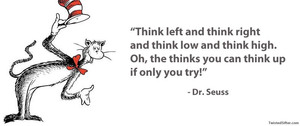
dr-seuss-the-thinks-you-can-think-quote

In the face of a global pandemic that has shuttered businesses and wreaked havoc on the lives and livelihoods of every person, family and community...we have seen some silver linings...
CHOSUN students and instructors have stepped up to the plate with creativity, ingenuity and passion to come together in common cause...
We all have been forced to see things differently, be more patient and use our resources to create our own reality... no matter what age...Read about some ways the CHOSUN family has met the challenge of our time...

ONWARD AND UPWARD...NEVER GIVE UP!

Happy Father's Day 

View the 2019 Chosun Taekwondo Academy Video Retrospective 

Check out all upcoming CHOSUN events on the events page of the CHOSUN website!
Please visit the updated and improved CHOSUN Yelp page!  ReviewUsOnYelp
and CHOSUN on Instagram

 
Kamsahamnida,                                                                                  
                                                          Patty Cook, Editor www.facebook.com/chosuntkd  download
 

 Chosun Taekwondo Academy celebrating 23 years!
Chosun Taekwondo Academy Newsletter celebrating 10 years!

Subscribe at: www.chosuntkd.com

Wednesday, November 2, 2016

"Mrs. Pyke Eats Korea" Soom Dobu Jigae

"Mrs. Pyke Eats Korea" can be seen every month
in the Chosun Taekwondo Academy newsletter
This column is from the November, 2016 newsletter

Soon Dobu Jigae
Here is a recipe of one of my favorite Korean soups, Soon Dobu Jigae. You will see this soup served in many Korean restaurants in a spicy version. It is served in a spicy bright red broth with seafood
and silken tofu. A perfect soup to cure the common cold! This version is a white broth and not at all spicy. I love to serve this as a first course when we prepare Galbi (short ribs) on our table top grill. This is a great opportunity for you to use your Ttukbaegi. This is that fabulous brown glazed earthenware pot that you can get at any Korean market. It makes for such a wonderful presentation when you bring your bubbling Jigae to the table.
RECIPE
24 oz. silken tofu
8 oz. thinly sliced pork tenderloin or beef
(Vegetarians, skip the meat and use sliced shitake mushrooms)
1 cup chopped scallions
2 Tbs. minced garlic
2 Tbs. sesame oil
2 Tbs. soup soy sauce or soy sauce
Ground black pepper to taste
Splash of mirin

Place your Ttukbaegi (soup pot) over medium high heat and add 2 Tbs. sesame oil. Add your meat or shitake mushrooms, a pinch of salt and saute for 2-3 minutes. Add 2 Tbs. minced garlic and stir fry a few minutes. Now add your entire blocks of silken tofu and close lid and let simmer for 2-3 minutes. Remove lid and add 2 cups water. Let boil 5-10 minutes and try not to stir to much, we want the tofu to remain in large glorious chunks! Add your chopped scallions, 2Tbs. soup soy sauce or soy sauce and a splash of mirin. Ladle into bowls and top with a generous spoonful of Maeun-Yangnyeom-Ganjang, Spicy Soy Dipping Sauce.
Maeun-Yangnyeom-Ganjang
Mix together
3Tbs. chopped scallion
5 Tbs. soy sauce
2tsp. minced garlic
1 tsp. Korean ground red chili pepper
1tsp. toasted sesame seeds
Pinch black pepper
½ t sugar
This sauce is wonderful for dipping any grilled meat and on top of rice.
This sauce is also served on fried tofu and is wonderful hot or cold. I’ll write about this dish next month.
Haeng bog meogneum
Happy Eating!!
Pamela Pyke

Subscribe to the CHOSUN newsletter at: www.chosuntkd.com

Monday, October 3, 2016

The Chosun e-newsletter Archive Volume 7 #10 October, 2016

Dear Martial Arts Enthusiast,

Welcome to the October edition of the  Chosun Taekwondo Academy e-newsletter!  As we approach the final months of the year, don't forget to mark your calendar for the 19th Annual Awards Banquet and Dinner Dance on Saturday, December 3rd which is always the culminating social highlight of the year. When you receive your invitation by mail, please respond as soon as possible to reserve a place for you and your family.


Check out all upcoming CHOSUN events on the events page of the CHOSUN website!

View the 2015 Chosun Taekwondo Academy Retrospective 

Kamsahamnida,                                                                                                            facebook button
Patty Cook, Editor www.facebook.com/chosuntkd
HAPPY HALLOWEEN !


Chosun Taekwondo Academy celebrating 19 years!

Read the entire newsletter...
Subscribe at: www.chosuntkd.com

Sunday, April 17, 2016

"Mrs. Pyke Eats Korea" Jeon

"Mrs. Pyke Eats Korea" can be seen every month
in the Chosun Taekwondo Academy newsletter
This column is from the March, 2016 newsletter


Jeon, Korean Pancake
When we say let’s have pancakes we envision fluffy stacks, dripping with butter and maple syrup. Strawberries, blueberries and whipped cream! A hot cup of coffee and the New York Times. Say let’s have pancakes in Korea and it’s a “Savory” heaven. Potato, Kimchi, Scallion and Seafood, always served with a soy and vinegar dipping sauce. Nothing could be more satisfying than a Jeon, Korean pancake.

Jeon (pancake) can be prepared as one large pancake to share or tiny bite sized medallions. Usually served as a snack with beer or as a side dish (Banchan).
One of my favorite memories of eating Jeon was on our Korea 2012 trip. We arrived at a small roadside restaurant that served only Jeon. The placed was filled with boisterous families enjoying beer and Jeon. They were so surprised and delighted to see this huge crowd of Americans descend upon their local Jeon hot spot! The fathers at one table were pretty much three sheets to the wind and kept toasting us over and over again! We all sat at a traditional low table on the floor and enjoyed an amazing time and meal.
We enjoyed three types of Jeon. A large Gamjajeon (Potato Pancake) was served. So different than a crispy shredded potato pancake that we are accustomed to, served with sour cream and apple sauce. The Gamjajeon are made with a raw potato puree and scallions and sauted till golden on each side. They are so chewy and gooey at the same time. We were then served Pajeon (Scallion Pancake). It was divine. Loaded with whole scallions and a small amount of a flour and egg batter. These are also sauted till golden brown. Last but not least, Haemul-pajeon, Seafoo Scallion Pancake. Super yummy and loaded withsquid and shrimp. This is one of my favorites and you will see this pancake served at almost any Korean restaurant in the U.S.A. As I mentioned before the Jeon is served with a soy sauce and vinegar dipping sauce.
Any vegetable such as zucchini that is coated in flour and dipped in egg is considered a pancake in Korea. I would say close to every meal we ate in Korea was served with Ban Chan (all the little side dishes) and Jeon was always one of these dishes. We had the Hobakjeon (zucchini pancake) many times and also Dongtaejeon (Pollock Pancake). This was a favorite of mine. A Korean fish fry!

Friday, January 22, 2016

In the Shadow of a Grandmaster by Doug Cook

Grandmaster Richard Chun and Master Doug Cook
appeared in Totally Taekwondo Magazine April, 2015 Issue #74

     I consider myself and the students I teach fortunate indeed; not simply because we are graced with a comfortable, clean, and culturally focused training environment, but because we are a member of an elite organization under the direction of a world-renowned grandmaster who promotes a traditional style of taekwondo. In today’s world of mixed martial arts and schools boasting curricula “so simple a child can do it”, we sometimes forget the value this inheritance offers. The legacy we as a school enjoy not only reflects the comprehensive nature of taekwondo, but extends to the personalities who molded our discipline through its formative years on up to the present.
     It is no secret that the roots of taekwondo were greatly influenced by Japanese Shotokan karate-do as well as various forms of Chinese fighting arts. Furthermore, there currently exists a clear delineation between the traditional martial art of taekwondo and its sportive mate firmly based on Olympic-style sparring. Nevertheless, the present state of taekwondo as it applies to both the defensive art and world sport, coupled with the outstanding success it has achieved as the most popular martial discipline in the world today, is unquestionably linked to the masters and grandmasters native to the Korean peninsula that have refined and transmitted its unique set of techniques and philosophical doctrines over the decades. Subsequently, maintaining a relationship with an elder instructor having a direct link to the founders of the art nurtures respect for heritage in tandem with technical accuracy - benefits that cannot be overstated.
     Establishing a modern martial art based on the elements of other traditional disciplines may have its benefits as evidenced by the popularity of jeet kune do - the martial art created by the late Bruce Lee. Yet, in today’s age of internet certification and canned, commercialized curricula, it is far too easy to pick and choose techniques that highlight the physical abilities of an individual instructor, leaving out countless defensive strategies that require years to refine in the process. In many cases the long range efficacy of these endeavors turn out to be questionable at best causing students to question the authenticity of their art. Pitfalls like this can be avoided by following in the footsteps of an experienced and legitimate grandmaster that supports a combat-proven discipline based on tradition.
     Training under a grandmaster that is an acknowledged source of traditional skills is akin to being in possession of the original copy of an important document displaying clear and concise print. Undisputedly accurate in its current iteration, copies of this document, particularly those many generations later, are certain to diminish in quality resulting in distortion and possible misinterpretation. The same principle holds true when learning a kick, block or strike. A simple twist of the wrist, turn of the hip, or snap of the leg, passed on by a human vessel with decades of experience can make the difference between the mediocre execution of a basic technique and a stunning demonstration of defensive skill. The flawless transmission of poomsae, or formal exercises, dramatically reflects this belief. While a great majority of the modern forms have been exhaustively cataloged both in print and on the web, many of the traditional hyung dating back decades in not centuries, are left to the mercy of memorization. Here is where the golden relationship between venerated master and worthy disciple clearly begins to materialize. A legitimate grandmaster with roots firmly planted in decades of Korean martial arts practice, who has doubtlessly performed advanced poomsae hundreds if not thousands of times, has the capacity to correct even the most minute detail within a given form. Yet, left unattended, the practitioner will innocently promulgate error while infecting others ultimately causing the execution of the poomsae over time to stray further and further from the core of its original intent. Grandmasters with an eye for the more traditional components of the taekwondo curriculum are also more likely to focus on authentic training in il su sik (one-step sparring), ho sin sool (self-defense techniques), meditation, and ki development exercises as well. 

      Moreover, accumulated wisdom is generally a function of age. While there exists many youthful, talented grandmasters, acquired skill of this magnitude is generally attributed to those of advanced years. Time has a tendency of tempering ones outlook on a discipline such as taekwondo making the grandmaster, in many cases, a teacher who is demanding yet compassionate, high in expectations yet forgiving of frailty. He or she is a fountain of knowledge, an advisor at times imparting thoughtful counsel and, as is the case with our grandmaster, a single, unifying symbol of a global organization. Physically, even those of senior rank, years older than their students, can inspire and elicit respect through the execution of basic technique performed effortlessly. 
      Accepting the leadership of a grandmaster furthermore removes the potential of being hindered by a provincial world view of taekwondo. For the master instructor of a dojang not located in a large metropolitan area, interaction with colleagues can be minimal at best. Therefore, grandmasters with ties to others in the taekwondo community have the ability of introducing their loyal students to peers of equal seniority and interests thus opening the door to new relationships and unforeseen possibilities. Often a confederation of master instructors under the umbrella of a noted grandmaster can lead to mutual training experiences, seminars, association tournaments, and even trips to Korea – the homeland of taekwondo.
     But at the end of the day, it is important to remember that the grandmaster is still only a human being commensurate with all the shortcomings that station entails. Students often mistakenly elevate the grandmaster to messianic proportions leaving themselves open to the dual specters of disappointment and disillusionment should their failings become evident. Therefore, just as the grandmaster showers his charges with understanding so, too, must the student exhibit consideration in matters concerning passions of the heart.
    Some would assert, similar to a flower deprived of sunlight whose growth and hue is limited by the overhanging branches of some great tree, that a master instructor’s rate of maturity can be hindered by the influence of a seemingly oppressive grandmaster. Yet there are vines and flowers that flourish in shade without the benefit of direct sunlight. Likewise, the humble master, and thus his or her students, can flourish in the shadow of a grandmaster whose sincere intent is to promote the martial art of taekwondo through the inculcation of wisdom, compassion, and technical excellence.

Master Doug Cook, 6th dan black belt, is head instructor of the Chosun Taekwondo Academy located in Warwick, New York, a senior student of Grandmaster Richard Chun, and author of four best-selling books entitled: Taekwondo…Ancient Wisdom for the Modern Warrior, Traditional Taekwondo - Core Techniques, History and Philosophy, Taekwondo–A Path to Excellence, and Taekwondo Black Belt Poomsae: Original Koryo and Koryo, co-authored with Grandmaster Chun along with its companion DVD. Master Cook can be reached for Korea tours, seminars, workshops or questions at www.chosuntkd.com or info@chosuntkd.com.

Wednesday, December 30, 2015

Taekwondo In Korean History: Meaning Lies in the Eyes of the Practitioner


Taekwondo In Korean History:
Meaning Lies In The Eyes Of The Practitioner

by Taylor DiMeglio


Modern dicta implores us to “let go of the past,” to “stay in the present,” but as useful as it is, in taekwondo as in life, to live in the all-important N-O-W there is much to be said for mindfully including a consciously framed narrative of the history which informs our focus. Consciously framed. In other words, with deliberate choice, for it is not our histories which define our fates but the perspective through which we view them. Shall we be inspired or disillusioned? Do we wish to grow in purpose or to wallow in defeat?


Consider the person who grows up in an abusive environment. At one juncture in life, she counts herself a victim, at another juncture, a survivor. Both stances hold their own kinds of truth; yet, only one yields a fruitful path. So it is with taekwondo.

Some question taekwondo’s legitimacy as a korean martial art, or even as a unique martial art in its own right. After all, they say, a great deal of its techniques originate elsewhere, in China, and, significantly, Japan, via shotakan karate. How can it, then, be considered Korean? Further, some senior organizational taekwondo delegates have diminished, suppressed or otherwise denied avenues of external influence, with some suggesting that taekwondo has been around—in pure form—for thousands of years. (Surely, cave drawings do not lie!) Meanwhile, underplaying or overplaying data raises doubt and suspicion, opposite of its intention.

These are narrow frames, inhibitors of growth. The practitioner who adopts them sets himself up, with conscious or unconscious will, for discouragement and defeat. If I practice an illegitimate art, this mindset says, I, too, become illegitimate. Thus, the skeptic maintains an ‘out,’ imposing in practice a level of disengagement which easily turns into a loss of interest and eventual departure from taekwondo training. Initial gains are wasted. Enrollment declines.

Far better to take the broadest view, to understand taekwondo through the widest lens of Korean history and culture, recognizing that it is a veritable manifestation of a long, intricate narrative and inherently infused with the driven, willing spirit of its people. Pass on the legend of Tangoon, mythical forebear of this “land of the morning calm,” whose philosophical adherence to a universal humanism and duties to family and state underlie central tenets of Korean culture and taekwondo, and practitioners grow in humility and grace. An enlightened spirit underscores skill. Speak of the feats of ancient Hwarang and Sunbae warriors and allow their prowess to infuse today’s practice. Honor the full history through which taekwondo derives, and you are as a wise farmer who does not arbitrarily scatter the seeds, but first tends the soil, recognizing it as the origin of abundance.

Korean history is rife with struggle. Geographically speaking, it is not surprising that the citizens of a country formed on a peninsula might be leery and defensive, when they are both perceptually and actually vulnerable to attack. Ancient kingdoms with rivaling tribes and fearsome warriors establish the backdrop for a people honed to endure, to survive, and, ultimately, to overcome. The Paekche kingdom (18 BCE - 660 BC), Koguryo (37 BCE - 668 BC) and the small but mighty Sillan kingdom (57 BCE - 935 AD) warred tirelessly, though Silla was the eventual triumphant, unifying the three kingdoms into a collective dynasty. Korean strife didn’t end with the ancient kingdoms, but it is here, in antiquity, where the taekwondo practitioner authentically finds Korean spirit in its originating indomitable force. It’s still alive today, and, along with it, the skills and techniques of old, derived of kwonbop and taekyeon, which were practiced by the Sillan Hwarang.

Where infighting set the stage for indigenous martial development, external conflicts broadened its scope, particularly during the Japanese occupation from 1910-1945. During this thirty-five year period of extreme cultural oppression—which included book burning, sexual enslavement and a ban on native language and religion among other severe prohibitions—martial arts training was roundly forbidden, leaving the devoted with few options. Some practiced in secret. Others left Korea and learned where training was available to them, in China and, notably, Japan itself.

It may seem a strange decision for Korean martial artists to entrust their training to enemy hands, even where animus between nations may not have necessarily translated between individual citizens. Yet, life has its mandates. We are not called to travel passively as dust carried on wind, but to engage, to live, to set our own course with purpose. The martial artist, Korean or otherwise, strives for the Warrior Within, that elusive inner self which is enduring and impervious, who surpasses the temporal realm.

It comes again to perspective. The practitioner who demands cultural purity over all will find disappointment in its stead, while the practitioner who honors the multifarious influences of any chosen martial art and the collective value intrinsic in all martial arts gains wisdom alongside skill. It is this frame which emphasizes proficiency over egoistic evaluations.

So, too, the practitioner caught up in identifying the single best martial art might just as well spend time selecting a single best variety of toothpaste. Is it the whitening? The baking soda? Enamel protection? Should we do away with fluoride? Caught in the minutia of choice, the practitioner’s focus is cluttered and divided, and another trap, the trap of comparison, is set. Use comparison as a vehicle for fault-finding in a marriage and things become rocky indeed. Those who dig for faults will find them, though primarily because of the perspective of the mind which seeks them than due to the particular shortcomings themselves. No one and nothing is perfect. The practitioner who digs instead for treasure—in relationships, in themselves, in taekwondo—will find it and prosper.

Following the Japanese Occupation, bans were lifted. Korea set out to restore their vast cultural heritage—a restoration of native arts, food and philosophical paradigms. Korean martial artists, among them many masters, sought to unify the whole of their learning, incorporating not a narrow few but all of its influences including Japan, China and their own ancient, native forms. It incorporated not only physical techniques and skill but the Confucian and Buddhist overtones and the in-dwelling Korean spirit so indicative of their history and important to their culture. Through the unwavering efforts of General Choi, Hong Hi this martial art came to be officially known as taekwondo, a Korean martial art. 

Friday, October 9, 2015

Ki: The Fuel That Amplifies Technique

by Master Doug Cook
Taekwondo Times "Traditions" Column March, 2015

      The practice of traditional taekwondo requires the student to become proficient in a multitude of blocks, kicks, strikes and sweeps. However, in order to amplify these techniques far beyond the limitations of the physical body, one must introduce an element not easily definable in common terms. This element is referred to as Ki in Korean and Chi or Qi in Chinese. Grandmaster Richard Chun, a true pioneer and practitioner of traditional taekwondo states that, “Ki is the cosmic ocean in which everything exists.”    Ki development is an essential component of martial arts training that is often overlooked in all likelihood due to the metaphysical issues it raises. Nevertheless, teaching traditional taekwondo
Master Cook teaching Ki development exercises
without offering the practitioner exercises in Ki development is tantamount to sitting someone behind the steering wheel of a car, but telling them nothing of the fuel that powers its engine. Ki is the elixir that amplifies technique and triggers great strength; it is the force that shields the body from harm while maintaining health and a sense of well being when in balance.
     For centuries, since the publication of the Nei Jing Su Wen, or the Classic on Internal Medicine, by the Yellow Emperor, Huang Di (2697-2597 B.C.), Asian culture and traditional Chinese medicine in particular has recognized the existence of a force within the human body essential to the maintenance of life.
Today, the relevance of Ki is appreciated by millions of people who practice the discipline of taijiquan, benefit from the flowing postures unique to qigong, and find relief from pain through the treatment of acupuncture. Each of these therapeutic arts in their own way relies on some form of Ki manipulation. Besides the martial arts, use of Ki is common to other disciplines unique to Asian culture: calligraphy, the tea ceremony, and the arrangement of flowers, call on some form of ki management in order to advance their practice. Still, the structure of this vital life force remains a mystery in no small part due to its evanescent nature. Studies have been conducted in an attempt to confirm the reality of Ki but at present, even though energy fields surrounding the body have been measured, no concrete clinical evidence is available to support its existence.
     Physically, Ki can be thought of as a bioelectric current. Subsequently, the martial artist can use this energy to short circuit another’s malevolent energy causing it to betray him in the process. One basis for this assumption is that everything in nature is composed of matter vibrating at different energy levels; molecules are composed of atoms bound together by electrons orbiting a minute nucleus, all with negative and positive charges. If the practitioner can cause his adversary’s kinetic energy to flicker, even for a moment through the use of Ki manipulation, then he has gained the upper hand even before a blow has been dealt. Again, while this effect, defined as combat Ki, is unsubstantiated by science, it stands as the cornerstone of many classical martial disciplines such as hapkido and aikido that rely on yielding to an opponent’s negative intentions.      
To understand Ki and its movement through the body, it is helpful to visualize systems in nature that we are familiar with. In doing so, both the human circulatory system and an ordinary electrical circuit come to mind. Both require a physical pathway for transportation. Arteries, veins and capillaries carry blood. Copper wire transports electricity. What, then, conveys Ki? Ki is thought to travel through a series of channels or meridians that span the body. The two grand meridians, located on the front and back of the torso, feed a complimentary series of channels. These pathways known as the twelve regular meridians are associated with specific organs of the body as follows: lung, large intestine, stomach, spleen, heart, small intestine, bladder, kidney, pericardium, triple warmer, gall bladder, and liver. An additional eight, grouped in pairs, are known as the extraordinary meridians and perform a separate function.
     Nevertheless, all of these meridians are invisible to the eye resulting in great skepticism concerning their existence. However, it is these very meridians and their related pressure points that the acupuncturist stimulates for therapeutic purposes and the martial artist activates to amplify technique. By removing blockages in the meridial system, which can cause illness and in extreme cases, death, the practitioner of traditional Chinese medicine has the power to cure a variety of diseases. Conversely, the taekwondoist, by striking one or more of the many acupoints that dot the body, can incapacitate an attacker. Metaphorically speaking, these pressure points are similar to stations along a railway. Yet, rather then bearing the name of a town or village, they are designated by a number and the anatomical organ with which they are associated. The meridians mirror the tracks while Ki itself would be the engine traveling along the rails. This analogy, while simplistic at best, crudely describes the method of how Ki is distributed throughout the body.
     Located two inches below the navel, the Ki center (tanjun in Korean, or dantien in Chinese), represents the reservoir from which Ki radiates. In Chinese, dan is defined as crystal or the essence of energy, while tien is translated as the area for the essence of energy. It is here that Ki is stored after entering the body. According to Reed, the tanjun is best described as the “one-point, a tiny star, or vortex sucking in immense amounts of energy from the universe.” 
     There are many theories regarding the tanjun, the foremost being that it is the physical, cellular center of the human anatomy from which the body develops outward from conception. It is also considered ones natural center of gravity around which the extremities move. This concept becomes all the more evident when we view the contrasting outlooks between Eastern and Western culture in regards to the hub of human intent. In Western society, we often say that we “think from the heart”; heart ache, heart break, and heart-felt thanks are all conceptual indicators of this principle. Conversely, in Eastern thought, intention is said to emanate from the hara in Japanese, or, as we now know in Korean, the tanjun. This fundamental difference in belief reflects the conviction that the vital life force is distributed from the body’s center and, thus, can be stored, channeled, manipulated, and amplified to promote health and intensify technique in the case of the martial artist. Hence, it can be said that Ki not only projects, but protects. 
    Yet, before one can knowingly utilize Ki to their advantage, they must first acknowledge and trust in its existence. This requires a leap of faith for many Westerners. Ki is benevolent in nature and, therefore refuses to be abused. Through it, the martial artist can dominate, but not terrorize. If the practitioner of qigong, acupuncture, or the martial arts attempts to
Master Doug Cook
manipulate Ki for selfish or malevolent purposes other than cultural tradition, therapeutic value, or self-defense, it is sure to fail them every time. Called upon properly, however, with respect, dignity, and benign intent, it will focus intention, heal, nurture a sense of well being, and amplify traditional taekwondo technique far beyond the limitations of the physical self.  

Master Doug Cook, 6th dan black belt, is head instructor of the Chosun Taekwondo Academy located in Warwick, New York, a senior student of Grandmaster Richard Chun, and author of four best-selling books focusing on taekwondo. He has been a TaeKwonDo Times columnist over fifteen years. Master Cook can be reached for seminars, training tours to Korea, workshops or questions at www.chosuntkd.com or info@chosuntkd.com.