Showing posts with label YMAA Publications. Show all posts

Tuesday, April 8, 2014

Chosun e-newsletter Archive Volumn 5 #4 April, 2014


An Introduction to the Martial Arts for Adults
Sunday March 30, 2014

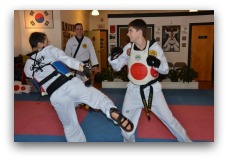
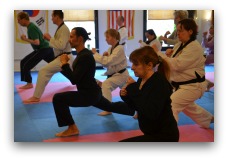
The second community service event sponsored by Chosun in March featured a free two-hour workshop familiarizing adults with the


philosophy and techniques of traditional Taekwondo. Participants discovered how mind, body and spirit can benefit significantly from a safe yet disciplined study of this Korean defensive art. Training included, meditation, flexibility exercises and self-defense drills. Kamsahamnida to all Chosun instructors for your time and inspiration and to participants for your spirit and willingness to learn.
Click image above for more photos

Read entire newsletter...

Thursday, January 2, 2014

Chosun e-newsletter archive Volumn 5 #1 January, 2014

1487325_774858722528381_446340930_nDear Martial Arts Enthusiast,

Welcome to the January, 2014 edition of the  Chosun Taekwondo Academy e-newsletter. This year, Chosun will turn 17! Just about the same age as four of our Junior Instructors who will be moving on to the next exciting phase of their lives in a few months. As Master Cook says, "these noble 
students represent sturdy links in the great chain of martial arts knowledge." And it is with this in mind, that we celebrate their (and Chosun's) perseverance and indomitable spirit... The journey continues!
(take note of NEW Chosun Winter Schedule and the 2014 Belt Promotion Test Dates listed below)

View the 2013 Chosun Taekwondo Academy Retrospective
Kamsahamnida,                                                                                                                images 2facebook button
Patty Cook, Editor www.facebook.com/chosuntkd                              
                                                                                                                                                   images.jpeg
         
Happy New Year! 새해 복 많이 받으세요
(seh heh bok mahn ee bahd euh sae yo)
Chosun Taekwondo Academy celebrating 16 years!


Tuesday, May 28, 2013

The Evolution of Tae Kwon Do Poomsae, Hyung and Tul

by Master Doug Cook

6th Dan Black Belt / Chosun Taekwondo Academy


 Long before the advent of sport sparring and the invention of modern safety gear, in a time when to fight meant to defend one’s life from almost certain death an ingenious method of transmitting martial arts skills from venerated master to loyal disciple was developed. Legend has it that
experienced warriors returning unscathed from combat, a testimony in and of itself to their martial prowess, mimicked techniques used to vanquish opponents on the field of battle for the benefit of those less qualified in the ways of war. This ritual may have been practiced around a campfire, in secret gardens or in the incense-filled halls of ancient Buddhist temples lending credence to the notion that the dynamic practice of formal exercises has existed for centuries. Several examples demonstrating this concept can be traced back to antiquity with roots found in primitive works of art and ancient yogic postures originally intended to promote health and core strength in sedentary clerics.

 Today, poomsae, hyung or tul - all culturally-specific terms for Korean martial arts patterns - can be defined as choreographed sequences of techniques aimed at defeating multiple attackers originating from various directions. They can also be thought of as “quality shapes of strength” representing the comprehensive catalog of Traditional and Kukki Tae Kwon Do skills. Moreover, poomsae demonstratively symbolize the essence of the art and can be distilled down into two discrete categories – those created in modern times as opposed to those tracing their pedigree to primordial practices.

In an effort to quantify the significance of this division, we must first appreciate that the formal exercises found in Tae Kwon Do today were not created in a vacuum. Rather, an analysis of the historical evidence at hand reveals that empty-hand fighting arts, in conjunction with their associated formal exercises, developed naturally across continents as various cultures adapted to cope with the dangers posed by increased trade and human aggression accompanied by imperialist desire. Still, the need to practice prearranged chains of combat tactics in a relatively relaxed environment devoid of mayhem and death was apparently universal.

In his book, Moving Zen, Shotokan karate-do practitioner C.W. Nicol describes forms practice as “a dynamic dance; a battle without bloodshed or vanquished.” He further goes on to say that, “we are somehow touching the warrior ancestry of all humanity” and that “of all the training in karate, none is more vigorous, demanding or exhilarating than the sincere performance of kata.” From this we can see that poomsae training, if approached in a traditional manner, not only cultivates defensive and offensive proficiency coupled with ki (internal energy) development, but establishes a profound link with masters of the past who clearly did not perform formal exercises merely for physical fitness as some would claim, but as a means of collating hard-earned martial skills often fostered on the field of battle or in the supercharged atmosphere of some distant training hall, for the benefits of students across the centuries.

In order to fully understand the complete history, philosophy and martial applications of Tae Kwon Do poomsae, hyung or tul, one must openly and without bias, take into account the role Okinawan/Japanese kata and Chinese taolu played in their creation. In 1901, on the Ryukyu archipelago, Yasutsune “Anko” Itosu (1830-1915) introduced karate into the mainstream curriculum of the Shuri Jinjo Elementary School and, later, throughout the Okinawan educational system as a whole with the long range goal of cultivating physical fitness and character enrichment in adolescents. This worthy objective was partially accomplished by practicing sanitized versions of the Pinan (Peaceful Mind) kata created by Itosu. Since, at least for school children, self-defense was not the prime focus of training the practical applications of techniques within the forms were intentionally masked in ambiguity or eliminated altogether. This method of instruction represented a major shift in formal exercise training that would have ramifications far into the future. Criticized for diluting the fundamental purpose of kata, and thus karate in general since forms represented the core of the art, Itosu later wrote, “You must decide whether your kata is for cultivation of health or for its practical use.” He further advised adult students to, “Always practice kata with its practical use in mind.”

 Yet, a further endorsement that kata represented a central pillar of karate-do doctrine, awaited the appearance of Gichen Funakoshi (1868-1957) who in his youth, traveled the back roads between Naha and Shuri by lantern light to study with both Itosu and one of his colleagues, Yasutsune Azato (1828-1906), sub rosa. Funakoshi’s required repetition of a single kata under the vigilant eye of Azato day in and day out, often for months on end, to the point of humiliation, clearly instilled an appreciation for the formal exercises that he would carry across a lifetime.

Funakoshi did not bring his karate to Japan until 1922 while in his early fifties. Yet through a concerted effort by he and his third son Gigo (1906-1945), who emigrated to Tokyo in 1923 at the age of seventeen, significant changes were made to the traditional methods of teaching Okinawan karate. By way of example, in an attempt to simplify the pronunciation of the Pinan kata, Funakoshi rechristened the nomenclature to Heian while altering certain prescribed stances and kicks. Likewise, Gigo is credited with the creation of ritual one-step sparring and the three Taikyoku, or Kihon kata that virtually mirror the Kicho patterns used today in traditional Tae Kwon Do. The Taikyoku set was generally used as a precursor to the more complex Heian kata.

Recognizing the vital roles Itosu, Azato and Funikoshi played in the proliferation of formal exercises brings us ever closer to the nexus of the correlation between Okinawan/Japanese kata and contemporary Tae Kwon Do poomsae, hyung or tul.  Indisputably, Korean formal exercises were heavily influenced by events that occurred in neighboring countries shortly before, or concurrent with, the Japanese Occupation of the nation during the years of 1910 to 1945. Clearly, the practice of karate required a deep understanding and respect for kata which continues to stand as a centerpiece of its practice to this day. This principle must surely have been inculcated in the minds of Chung Do Kwan founder Won Kook Lee (1907-2003), Byung In Yoon (1920-1983) of the Chang Moo Kwan, Hwang Kee (1914-2002) father of the Moo Duk Kwan and Choi Hong Hi (1918-2002) creator of the Oh Do Kwan, while studying in Japan under the direction of either Shudokan karate founder Kanken Toyama (1988-1966) or Funikoshi. All of these innovators, soon destined to promote enduring martial traditions within the borders of their native land, returned home from abroad undoubtedly with practical knowledge of the Taikyoku, Pinan, Bassai, Jitte, Empi and Tekki kata – all considered traditional formal exercises - that would ultimately evolve into the Kicho, Pyung-Ahn, Balsek, Sip Soo, Yunbee and Chul-Ki hyung respectively of Tae Kwon Do.

Throughout the 1950s and early 60s, when Tae Kwon Do, still referred to as taesoodo, tangsoodo and kongsoodo in many circles, was in its infancy, poomsae practice consisted largely of exercises derived from these Okinawan, Japanese and Chinese disciplines. As a result, the founding fathers of the original kwans or institutes could not help but transmit the formal exercises they learned abroad while at university as their nation staggered under the weight of the Japanese Occupation. Nevertheless, a strong desire existed among many masters, Choi Hong Hi not being the least, to create patterns with a distinctly Korean flavor. Consequently, in founding his style of Tae Kwon Do, Choi was the first to deviate from the past by developing the Chang Han set of formal exercises between 1955 and 1988 with the assistance of Tae Hi Nam, Young Il Kong, Cha Kyo Han, Chang Keun Choi, Jae Lim Woo, Kim Bok Man and Jung Tae Park, that bear the shadow of techniques culled from his training in karate-do. Furthermore, as a tribute, Choi based the underlying definition of each pattern on personalities and concepts pivotal to Korean history.  The Chang Han series of International Taekwon-do Federation tul currently consists of twenty-four patterns and differs significantly from others in the fact that their movements subscribe to a wave or sign-curve motion of the body as it transitions from stance to stance, sequence to sequence.

              Following Choi’s exodus from Korea and the eventual entrenchment of the Korea Taekwondo Association coupled with the establishment of the Kukkiwon and World Taekwondo Federation by a younger generation of practitioners not directly affected by Japanese instruction, three revolutionary sets of formal exercises were developed over the course of eight years in an effort to eliminate any vestige of foreign influence from the emerging art. Of these, the elder Palgwe and Yudanja series poomsae, created between 1965 and 1967, were intended to test the proficiency of color belt or gup level students, and dan or black belt practitioners, respectively. Partially inspired by the Pinan/Heian kata, the eight Palgwe poomsae reflect philosophical doctrines culled from the ancient Book of Changes or the I Ching and tend to emphasize low stances amplified by a variety of effective hand techniques. Moreover, technical components increase in complexity as they advance from one form to the next providing an effective barometer for rank advancement. Likewise, the Yudanja poomsae were crafted concurrent with the Palgwe set and at the time included Original Koryo, Keumgang, Taebaek, Pyongwon, Sipjin, Jitae, Cheonkwon, Hansoo and Ilyo, the latter eight of which continue to be sanctioned by the Kukkiwon and World Taekwondo Federation today. Aside from their technical diversity, the Yudanja set follow lines of motion described by Chinese and Korean characters that depict the philosophical concept characterized by each poomsae and contain advanced techniques unique to the dan grade holder. The committee members participating in the formation of the Palgwe and Yudanja poomsae consisted of kwan representatives Keun Sik Kwak (Chung Do Kwan), Young Sup Lee (Song Moo Kwan), Kyo Yoon Lee (Han Moo Kwan), Hae Man Park (Chung Do Kwan), Jong Myung Hyun (Oh Do Kwan), Soon Bae Kim (Chang Moo Kwan) and Chong Woo Lee (Ji Do Kwan).

              Nevertheless, Tae Kwon Do is the child of change and has continued to evolve in complexity since its inception during the tumultuous midpoint of the twentieth century. Even today, technical enhancements are evident at almost every training venue one visits in Korea, the homeland of the art; whether it is at universities offering taekwondology as a major, or the Kukkiwon, center of taekwondo operations worldwide, the quest for modernization proceeds unabated. And so, it should come as no surprise that less than a decade after the introduction of the Palgwe set it was decided by committee to generate a new and innovative series of formal exercises in conjunction with a vastly revised version of Original Koryo.

              Born in 1972, the Taegeuk poomsae by decree effectively replaced the existing Palgwe set. This significant modification in the Tae Kwon Do curriculum of the time is thought to have been politically-oriented inasmuch as the Moo Duk Kwan was not represented during the formulation of the Palgwe series. Yet in a practical sense, the Taegeuk poomsae were exceptional in that they contained the upright high forward or walking stance and featured a greater percentage of kicking techniques than their forerunners. Moreover, as Tae Kwon Do began to evolve into a combat sport with Olympic aspirations, a method was required to teach and support the upright fighting stance used in sparring competition and these new poomsae satisfied that need. If viewed from above, the pattern of movements within these forms trace the Chinese symbol for “king”. Bearing the namesake of the Korean flag, the Taegeuk patterns share philosophical principles running parallel to those of the Palgwe series based on the powers or elements of the Universe.

              Concurrently with the creation of the Taegeuk series, Original Koryo was superseded by an intricate, new poomsae bearing the same name. Opening dramatically with a knife hand block in back stance quickly followed by two sides kicks of varying height, Kukki Koryo poomsae was deemed appropriately challenging for the black belt holder and a worthy vehicle to gauge proficiency for promotion to 2nd dan. Overseeing the developmental process of Kukki Koryo and the Taegeuk series was Keun Sik Kwak (Chung Do Kwan), Young Sup Lee (Song Moo Kwan), Kyo Yoon Lee (Han Moo Kwan), Hae Man Park (Chung Do Kwan), Jong Myung Hyun (Oh Do Kwan), Soon Bae Kim (Chang Moo Kwan) and Chong Woo Lee (Ji Do Kwan) with the addition of Young Ki Bae (Ji Do Kwan) and Young Tae Han (Moo Duk Kwan). Certainly, over the years, other patterns were created by first and second generation grandmasters including the seven Chil Sung hyung of Moo Duk Kwan Soo Bahk Do and the eighteen Songham formal exercises of ATA Tae Kwon Do that reflect slightly divergent styles of Korean martial arts.

                     Today, the required performance of poomsae, hyung or tul by Korean stylists, except for those engaged in the practice of ITF Taekwon-Do, varies greatly from organization to organization and school to school. Based on the 1970s edict by Kukkiwon that the Taegeuk series eclipse the Palgwe set completely, a vast majority of master instructors sadly jettisoned the latter in favor of the former altogether. Likewise, the original iteration of Koryo was replaced by the radically different version currently sanctioned by the World Taekwondo Federation, Kukkiwon and the Korea Taekwondo Association. Nevertheless, schools supporting a classical approach to training frequently include both the Palgwe set and what has now come to be known as Original Koryo in their present syllabus. Moreover, as an adjunct to the traditional curriculum, many poomsae or hyung, with a direct lineage to their Japanese/Okinawan and Chinese kin are included as well. Although altered somewhat to suit the basic parameters of  Tae Kwon Do, we see evidence of this fact with the inclusion of formal exercises such as Balsek (Bassai), Chil-Ki (Tekki/Nihanji), Yunbee (Empi), Sip Soo (Jitte) and Jion, to name a few.

              Yet, just as the eum/yang or the duality of opposites predicts, formal exercise practice symbolizes a danger that cuts both ways; forfeiting poomsae training altogether in favor of strategies that focus exclusively on sport sparring represents a tragedy of grand proportions in denying the practitioner to experience the myriad benefits associated with the process. Likewise, attempting to master every pattern within the lexicon of Kukki and traditional Tae Kwon Do could, potentially, be of equal disservice since an in-depth analysis or hae sul of the practical applications embedded in the form may become blurred or ignored altogether. After all, as Funakoshi was fond of saying, “The old masters used to keep a narrow field but plough a deep furrow.”

              In many circles today, it is said that if the traditional methods of teaching Tae Kwon Do are to be preserved, it will occur in the West. This statement is partially based on the fact that major founders of the art no longer reside within the borders of Korea, but have long ago relocated here and abroad. Moreover, there exist a vast number of instructors outside the homeland of Tae Kwon Do who favor the practice of formal exercises coupled with practical self-defense techniques, both hallmarks of traditional Tae Kwon Do, over Olympic-style sparring and martial arts practice merely as a path to physical fitness. Clearly, it is this group who will safeguard the rich heritage of traditional Tae Kwon Do and act as fertile ground for the conservation and continued cultivation of the formal exercises unique to the art.


Master Doug Cook, a 6th dan black belt, is head instructor of the Chosun Taekwondo Academy located in Warwick, New York, a senior student of Grandmaster Richard Chun, and author of three best-selling books entitled: Taekwondo…Ancient Wisdom for the Modern Warrior, Traditional Taekwondo - Core Techniques, History and Philosophy, and his most recent contribution, Taekwondo–A Path to Excellence, focusing on the rewards and virtues of tae kwon do, published by YMAA of Boston. Master Cook and Grandmaster Chun have just completed a new book on Original and Kukki Koryo poomsae targeted for publication in July of 2013. Master Cook can be reached for lectures, seminars or workshops at www.chosuntkd.com or info@chosuntkd.com.


More to follow in upcoming new book; Taekwondo Black Belt Poomsae - Original Koryo and Koryo by Richard Chun and Doug Cook, published by YMAA Publications, Inc.


Wednesday, April 3, 2013

Promoting, Supporting and Preserving Traditional Taekwondo by Master Doug Cook


Taekwondo, literally translated, can be defined as “foot, hand, way” or “the way of smashing with hands and feet.” Such descriptive nomenclature understandably implies a curriculum rich in self-defense. Too often, however, this is simply not the case. Given the current popularity of sport competition in the martial arts, many techniques of defensive value have been stripped away or forfeited altogether in favor of those certain to score in the ring. While the thirst for Olympic gold has clearly played a significant role in catapulting taekwondo into the forefront, it should be remembered that the native Korean martial art contains over 3200 distinct techniques. These include a multitude of blocks, kicks, and strikes in addition to a variety of leg sweeps, joint locks and throws, truly qualifying it as a complete form of self-defense.

Consequently, in an effort to preserve the formal nature and defensive infrastructure of taekwondo as originally intended by a portion of its founders, a number of training institutes now promote what is referred to as traditional taekwondo; a measurably alternative style emphasizing a core philosophy rich in basic technique, poomsae and authentic defensive strategy with little or no emphasis on competition thus divorcing it somewhat from its sportive mate.

Nevertheless, this classification can be construed as somewhat of a misnomer since the history or “tradition” of taekwondo as it exists today, is relatively short with much of it being devoted to its promotion as a world sport. Like it or not, the answer to this paradox lays in the fact that taekwondo owes much of its pedigree to foreign influences, some of which are rooted in Funikoshi’s Shotokan karate-do, Ushieba’s aikido, Kano’s Kodokan judo, and to a lesser degree, Chinese gungfu. This is no accident given the geopolitical climate that existed in Korea during the turbulent years of the early to mid 1900’s. In fact, to the experienced eye, many of the martial applications taught today, having been handed down over the decades if not centuries, bear a striking resemblance to those fashioned by the founders mentioned above. Subsequently, in its evolutionary stage, prior to its promotion as an Olympic sport, taekwondo contained a complete palate of defensive techniques. With this in mind, the notion of taekwondo having a “traditional” component based on strong basic skills, poomsae and self-defense, predating the creation of organizations promoting its sportive component, materializes.

Yet, it should be understood that the defensive tactics of traditional taekwondo and the training elements that support them do not alone satisfy the conditions necessary to formalize taekwondo as a traditional martial art. Rather, the practice of poomsae, coupled with the basic fundamentals and the philosophical underpinnings that comprise them, represents a central pillar of the art and is a direct reflection of its unique character and heritage. While it is true that many of the forms practiced by the taekwondoist mirror those of rival Asian martial arts, it only goes to prove that in the past diverse martial disciplines from the region drew from a common well in an effort to construct practical, combat proven formal exercises. While these exercises by now have largely been modified and canonized against the backdrop of Korean martial culture, they embody universal defensive movements that date back to antiquity further supporting the traditional nature of taekwondo.

Moreover, a traditional martial art should embrace an overarching philosophy governed by a set or moral principles that limit its use except in situations of grave necessity. In addition, this philosophical doctrine, while enhancing the character of the martial artist, should reflect the cultural values extant in the discipline’s nation of origin. In the case of traditional taekwondo, these ethical guidelines date back to the seventh century when warriors of the Hwarang, an elite corps of young nobles, sought guidance from the Buddhist monk Wonkwang Popsa before entering battle. This moral compass continues to be practiced by the taekwondoist today.  

To further add veracity to the concept of taekwondo as a traditional martial art, it is helpful to establish that a militaristic legacy exists using the available evidence at hand.

 History demonstrates that for centuries Korean warriors have stood ready to defend their nation at a moment’s notice. In 1592, fighting monks, keepers of martial arts skills that had all but vanished during the pro-Confucian Chosun Dynasty, were recruited in an effort to resist a massive Japanese force lead by Toyotomi Hideyoshi intent on using the Korean peninsula as a stepping stone to China.

In 1953, taekwondo further crystallized into a legitimate form of self-defense when General Choi Hong Hi created the 29th Infantry Division by marrying regulation drills with martial arts training marking it as a truly unique entity within the Korean military.

But the great wheel of progress in the development of a unified Korean battle art with a complete defensive strategy did not stop there. In 1962, President Go Din Diem of South Vietnam requested that the Korean government send representatives of their native martial art to instruct the Vietnamese military in taekwondo. This initial group was lead by Major Tae Hee Nam of the Oh Do Kwan. In fact, this training became so effective that the Viet Cong directed their troops to retreat rather than confront the taekwondo-trained soldiers.

Contrary to the historical evidence at hand, critics who support the perception that taekwondo has evolved into nothing more than a popular, modern combat sport continue to debate the fundamental defensive value of the art. To further compound this issue, it is becoming increasingly difficult to locate an instructor faithful to the principles unique to traditional taekwondo. This dilemma is made all the more poignant in an article published a number of years ago by the late writer and martial arts instructor Jane Hallender entitled, Is Taekwondo a Sport or a Self-defense System? Acutely aware of the differences involved, Hallender warned, “There is more to taekwondo then just tournament competition. From kicks, to hand strikes, to throws, to joint locks, taekwondo possesses an array of defensive measures designed to thwart virtually any kind of attack. The most difficult part will not be learning the self-defense techniques, but finding a taekwondo instructor who still teaches them.”

With the above in mind, we at the Chosun Taekwondo Academy, in tandem with others globally who share a similar vision, have steadfastly attempted to promote, support and preserve this alternative entity that is traditional taekwondo.

For instance, at Chosun we adhere to a stringent curriculum composed of a repeating template that increases in complexity throughout the various belt levels; promotion from one rank to the next is predicated on proficiency in an escalating series of basics, one, two and three-step sparring, self-defense drills, poomsae, sparring and breaking skills. Students are also expected familiarize themselves with Korean terminology and the philosophy associated with their forms. There is nothing haphazard about our program; every student knows precisely what is expected of them in order to achieve advancement. All requirements are clearly written out to avoid confusion and preserved as password-protected downloads on our web site to be included in a training journal all students are required to maintain.

And since poomsae embodies the pinnacle of tradition in taekwondo, as a United States Taekwondo Association affiliate school under the direction of Grandmaster Richard Chun, we perform the eight Taegeuk and Palgwe set of poomsae, in conjunction with the traditional Moo Duk Kwan and required Kukkiwon black belt Yudanja series. We also practice the Kibon set, Pyung-Ahn hyung and several of the ITF tuls, although these are not required for promotion.

Lastly, at Chosun we highlight the self-defense, physical fitness, and self-enrichment components of taekwondo; this is in keeping with taekwondo as a martial way or a path to excellence. In addition, we amplify our practice with meditation and ki (internal energy) development exercises. While our school attends several tournaments a year, we do not view the classical martial arts simply as sport and so do not focus merely on competition. Instead, we look to fortify internal resolve, strength in the face of adversity and defensive skills that can effectively be relied upon to diffuse a confrontation that spirals out of control beyond the confines of verbal mediation. Then, in an effort to reach outside the walls of our dojang, we offer a series of technical seminars and self-defense courses to martial arts schools and civic groups at little or no charge.

The battle to maintain taekwondo as a traditional martial art is, ultimately, not an easy one. Students are required to learn far more than the few well-placed kicks favored in a competitive environment. Rather, the practice should be viewed as a vast mosaic with many interconnecting elements. If any one element is deficient, the remainder will likewise dissolve in failure; all must act in concert. The quest to develop proficiency is a demanding process that few have the time and, often, the resiliency to put forth. This makes the successful journey all the more dear to the worthy practitioner capable and willing to invest the determination required to support a meaningful education in traditional taekwondo. However, by following the above guidelines and unyieldingly offering a curriculum rich in technical skill to color and black belts alike, the traditions of taekwondo will remain strong going into the future.    


Master Doug Cook, a 6th dan black belt, is head instructor of the Chosun Taekwondo Academy located in Warwick, New York, a senior student of Grandmaster Richard Chun, and author of three best-selling books entitled: Taekwondo…Ancient Wisdom for the Modern Warrior, Traditional Taekwondo - Core Techniques, History and Philosophy, and Taekwondo–A Path to Excellence, all published by YMAA of Boston. Master Cook and Grandmaster Chun have recently completed a new book, Taekwondo Black Belt Poomsae: Original Koryo and Koryo, targeted for publication in July of 2013. Master Cook can be reached for lectures, workshops or questions at www.chosuntkd.com or info@chosuntkd.com.


Thursday, October 18, 2012

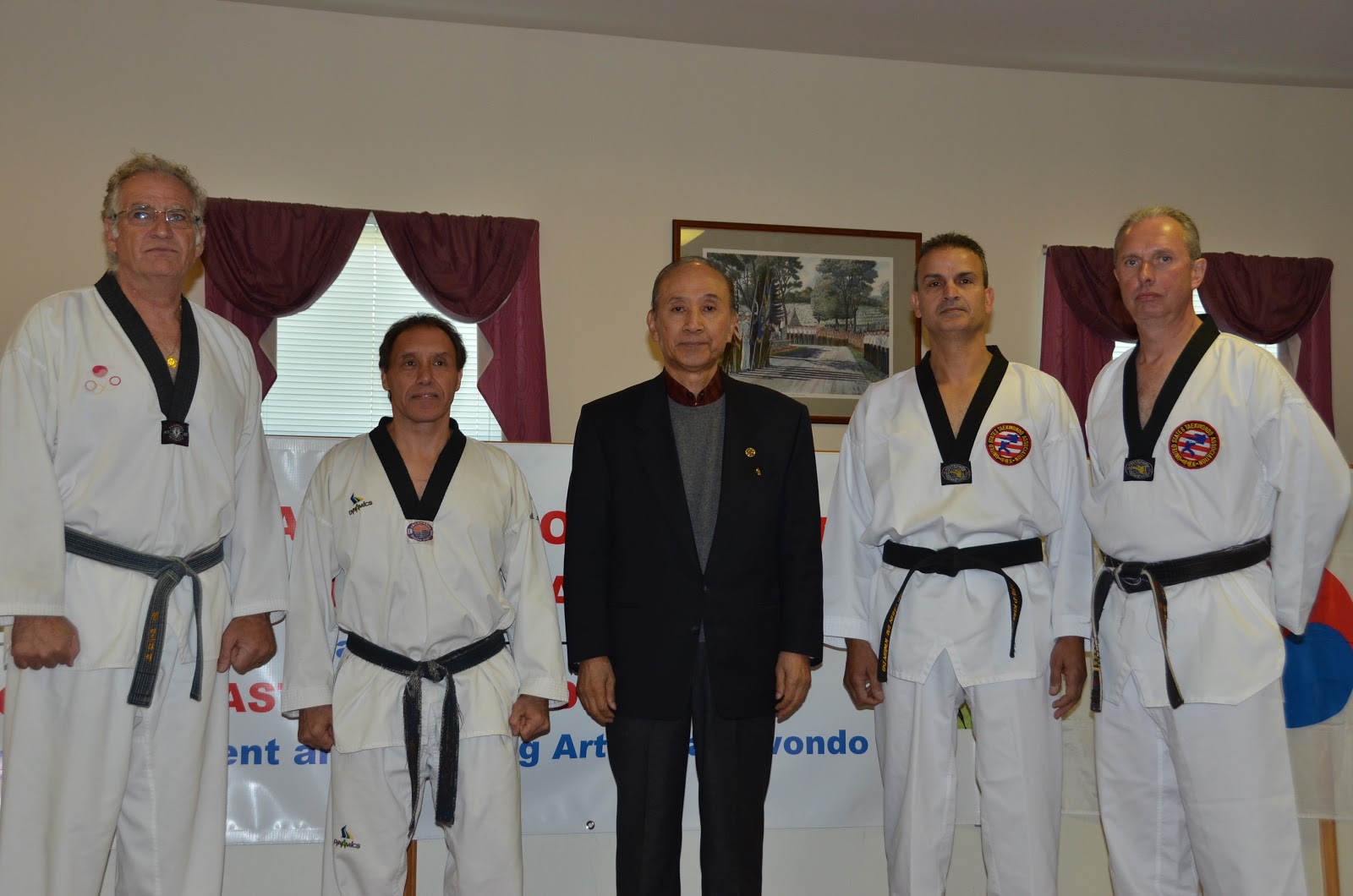
United States Taekwondo Association Eastern Regional Seminar with Grandmaster Richard Chun


Grandmaster Richard Chun and USTA Master Instructors
WARWICK - The Chosun Taekwondo Academy, a traditional martial arts and hatha yoga center with headquarters in Warwick, NY, recently hosted the annual United States Taekwondo Association Eastern Regional Seminar at the Warwick Town Hall. The event featured classes in basic technique, self-defense, poomsae, sparring drills, and wood breaking taught by top USTA master instructors including martial arts pioneer Grandmaster Richard Chun. One hundred nineteen martial artists attended originating from thirteen area schools in three states, including Han Ho Martial Arts, National Martial Arts League, Byung Min Kim’s Taekwondo, Long Island Taekwondo Center, Success Martial Arts, Haddock Taekwondo Center, Evolution Martial Arts, Ultimate Martial Arts and the Chosun Taekwondo Academy.

Master Doug Cook, head instructor of the Chosun Taekwondo Academy stated, “We were delighted and honored to be given the opportunity to host an educational event of this magnitude in the enchanting surroundings of Warwick. Here, the participants improved their skills rather than using them to compete against one another as they would have in a tournament setting. Our school, and others in the USTA, took full advantage of this memorable occasion.”

In a separate statement, Grandmaster Richard Chun, a ninth-degree black belt, Olympic coach, and one of the highest ranking international master instructors in the United States, supported his decision in selecting the Chosun Taekwondo Academy to host the event by saying, “Master Cook’s school typifies the true spirit of taekwondo. His traditional curriculum, geared towards children and adults alike, not only stresses the physical aspects of the martial arts, but the mental and spiritual components as well. The Chosun Taekwondo Academy is one of the most active affiliates in the USTA and this is why I chose them for this honor.”


Friday, September 28, 2012

Chosun e-newsletter Archive Volumn 3 #10 October, 2012


NEW BOOK BY RICHARD CHUN
& DOUG COOK
Taekwondo Black Belt Poomsae -
Original Koryo and Koryo


Release Date: July 1, 2013YMAA Publications, Inc

Owing to the extensive reputation of Grandmaster Richard Chun as a modern day taekwondo pioneer and Master Doug Cook's prolific and award winning writing on the subject, this new book promises to be a landmark treatise for taekwondo practitioners worldwide.


Read entire newsletter

Monday, August 6, 2012

Chosun e-newsletter Archive Volumn #3 July 2012

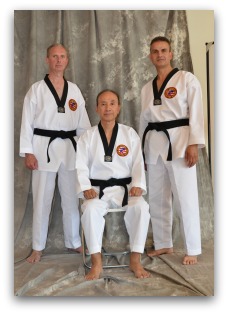
Photo Shoot for new YMAA book by GM Richard Chun and Master Doug CookPhoto Shoot 2012 084Monday June 18, 2012
Fort Lee, NJ
Grandmaster Richard Chun, Master Doug Cook and Master Fred Kouefati met for an extensive one-day photo shoot that would yield vibrant illustrations for the soon-to-be-published book Taekwondo Black Belt Poomsae: Original Koryo & Koryo, offered by YMAA Publications of Boston. With a release date of autumn 2013, the prime subject of the work as the title denotes, revolves around two Korean-based poomsae, or formal exercises as they are generically known.

(excerpt from upcoming article, A Photo Shoot for the Ages by Master Doug Cook)
Click image for more photos
Read entire newsletter

Monday, June 4, 2012

Chosun e-Newsletter Archive Volumn 3 #6 June, 2012

Dojang News and Events

May 20, 2012
Chosun Belt Promotion Test
Almost 100 students participated in the recent Chosun Belt Promotion Test.
From white to black belt, students demonstrated the proficiency, spirit and respect of true martial artists. Highlights of the day included some unforgettable breaks by Chosun Black Belt students. Among them were speed breaks, a head break and a double jumping break. Congratulations to all Chosun students.


Read entire newsletter

Monday, April 2, 2012

Chosun e-newsletter archive Volumn 3 #4 April, 2012


Chosun celebrating 15 years in the
village of Warwick
Leadership Team News


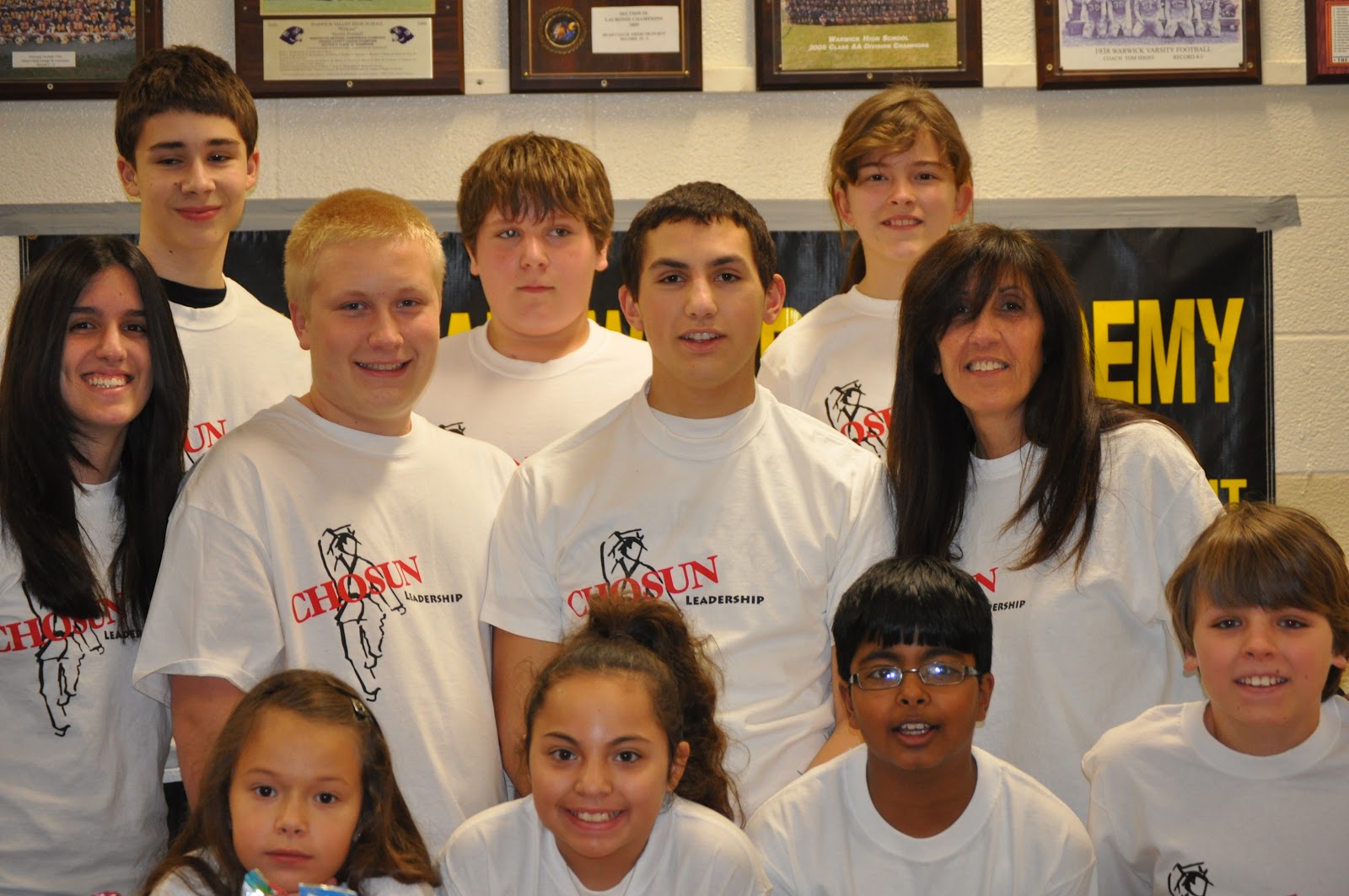
The Chosun Leadership Team's first fundraising event of the year was a great success. Proceeds will be donated to the Brian Ahearn Childrens Fund. Many thanks to team members, directors and parents for their hard work and support.
(Check out the NEW Leadership T-shirts designed by Chosun student and fine artist Catherine Pierson-DeCesare)
Don't miss the upcoming:
Annual Chosun Leadership Team Book & Bake Sale
Saturday April 28 (Springfest) 10:00am - 5:00pm and Sunday April 29 11:00am - 4:00pm,  Lewis Park Main Street, Warwick. Proceeds benefit the Warwick Lions Club Holiday Party for Community Children in Need.
Read entire newsletter


Friday, September 9, 2011

The Dojang - A Safe Haven During 9/11 Master Doug Cook


It is ten years hence and that fateful day is still vivid in my mind.

On September 11, 2001, I was employed in New York City at a job that I would soon vacate in favor of teaching martial arts professionally. On that tragic but stunningly brilliant morning, I stood on the corner of Fifth Avenue and Nineteenth Street watching the destruction of the World Trade Center unfold before my very eyes.

Seconds after seeing the second plane slam into the South Tower, realizing full well that this was an assault on our country equal only in magnitude to the infamous attack on Pearl Harbor, I quickly made the decision to leave the city to seek the safety of my home and family sixty miles away.
Read entire article