Showing posts with label korea destinations. Show all posts

Thursday, March 24, 2016

Korea Destinations Gyeongbok Palace

article by Jeff Rosser, appeared in the Chosun Taekwondo Academy  March 2016 newsletter
Gyeongbok Palace
     Gyeongbokgung, or Gyeongbok Palace, is the largest and quite possibly most well-known palace in all of Korea.  Located in Northern Seoul, this palace stands as a reminder of the greatness of the Joseon Dynasty.  Not only was it a palace, but it was also like a city unto
itself and was one of the first major structures built in Hanseong, modern day Seoul, which was the capital of the Joseon Kingdom.  This palace was constructed in 1394 by King Taejo who was the founder and first king of Joseon.  Since its construction however, the palace has been destroyed multiple times over the past 425 years by the Japanese.  As a result, many of the buildings standing today are newer restorations of the palace’s former grandeur.
     Located in the Gwanghwamun neighborhood of Seoul, this palace is easy to get to, is nearby numerous other sites and museums, and features a breathtaking backdrop with Bugak Mountain rising over the palace from the rear.  To get to Gyeongbokgung, take Seoul Subway Line 3 to Gyeongbokgung Station and go to exit 5.  The palace is closed every Tuesday but is open on most major holidays.

About the author:

Jeff W. Rosser is a teacher, martial arts instructor, and writer in South Korea.  He’s a former AAU U.S.A. National Karate Team member and has competed internationally in Karate and Taekwondo.  He also has over 24 years of experience in Karate, Taekwondo, Hapkido, Ju-Jutsu, and Judo.  He’s a columnist for Taekwondo Times (“The Hidden Art”), a monthly contributor to Totally Taekwondo Magazine, and the author of “Combative
Elbow Strikes:  A Guide to Strikes, Blocks, Locks, and Take Downs” published by Turtle Press.  Contact:  karatekajwr@yahoo.com (Email), www.mawriter.webs.com (website)

Subscribe at: www.chosuntkd.com

Monday, February 1, 2016

Korea "Destinations" by Jeff Rosser from CHOSUN newsletter February, 2016

Jeff Rosser's column can be seen in every monthly edition
of the Chosun Taekwondo Academy e-newsletter

Buyeo, The Gateway to Baekje

     Just a few hours south of Seoul, is a sleepy little town that was once home to one of Korea’s greatest kingdoms. That town is Buyeo, formally Sabi, which was the Baekje capital from 538 AD until the dynasty’s collapse in 660 AD at the hands of the Shilla (Gyeongju) and Tang (China). While most tourists to Korea visit Gyeongju, few have heard of the wonders of Baekje that Buyeo has to offer.
Jeongnim Temple Buddha Statue

     At the heart of the city is Busosanseong, a mountain fortress with earthen walls, pavilions, and temples. The back side of the mountain is highlighted by Nakhwaam cliff (falling flowers rock) which overlooks the Baengma River. Legend has it that upon the kingdom’s fall at the hands of Shilla and Tang, 3000 court ladies of Baekje refused to surrender and leapt from this cliff. It is said that the sight of their colorful dresses fluttering in the air looked like flower petals floating down into the river, hence the cliff’s name. From the base of the mountain, you can take a ferry down the river providing you with an excellent view of the cliff.
     Other sites that shouldn’t be missed include Gungnamji Pond, Jeongnim Temple, the Baekje Royal Tombs, and Baekje Culture Land. Gungnamji is Korea’s first artificial pond and is surrounded by willow trees, covered in lotus blossoms, and highlighted by a pavilion atop a small island in the middle of the pond. Jeongnim Temple sits in the center of the city and has its own museum as well as one of only two remaining Baekje stone pagodas and a Goryeo era stone Buddha statue. Baekje Culture Land is also worth visiting. Although a recreation, it’s a magnificent example of how the ancient capital once looked. While Sabi Palace is certainly impressive, it is the 5 story wooden pagoda of the reconstructed Neung Temple that attracts the most attention. Together, all of these sites make Buyeo one of Korea’s best kept secrets.


Read the entire newsletter
Subscribe on the Chosun Taekwondo Academy homepage: www.chosuntkd. 

About the author:

Jeff W. Rosser is a teacher, martial arts instructor, and writer in South Korea. He’s a former AAU U.S.A. National Karate Team member and has competed internationally in Karate and Taekwondo. He also has over 22 years of experience in Karate, Taekwondo, Ju-Jutsu, and Judo. He’s a columnist for Taekwondo Times (“The Hidden Art”),writes monthly for
TotallyTaekwondo Magazine and is the author of Combative Elbow Strikes: A Guide to Strikes, Blocks, Locks, and Take Downs, an in-depth analysis of the practical applications for five of the most common elbow strikes found in the martial arts. 
Contact info: karatekajwr@yahoo.com (Email)


Tuesday, January 12, 2016

Korea "Destinations" by Jeff Rosser from CHOSUN newsletter January, 2016


Jeff's monthly Korea "Destinations" column can be seen every month in the Chosun Taekwondo Academy newsletter


Seodaemun Independence Park
               Located in northwestern Seoul, Seodaemun Independence Park pays tribute to those who fought for Korea’s independence from Japan (1910 – 1945).  The focal point of the park is the Seodaemun Prison History Hall.  It was here that the Japanese incarcerated, tortured, and executed Korean activists who spoke out and fought against Japanese colonial rule.  Pictures of former inmates line the walls and the cells have been left just as they were.  There are also a number of exhibits displaying the torture and abuse inflicted on the inmates by the Japanese guards.  Most areas of the prison are open to the public and serve as a chilling reminder of Korea’s colonial past prior to independence.
Seodaemun Prison Hall
               At the entrance to the park, you will also find the Independence Gate.  This massive stone gate is of European design and stands in the place where the Yeongeunmun Gate once stood during the Joseon era.  The Yeongeunmun Gate was destroyed in 1895 by the Japanese and the new Independence Gate was erected a year later.  On weekends, the park is a popular destination for locals wanting to relax and tourists seeking to better understand Korea’s complex history.  The best way to reach the park is by taking exits 4 or 5 from Dongnimmun Subway Station on Line 3.
About the author:
Jeff W. Rosser is a teacher, martial arts instructor, and writer in South Korea. He’s a former AAU U.S.A. National Karate Team member and has competed internationally in Karate and Taekwondo. He also has over 24 years of experience in Karate, Taekwondo,
Hapkido, Ju-Jutsu, and Judo. He’s a columnist for Taekwondo Times (“The Hidden Art”), a monthly contributor to Totally Taekwondo Magazine, and the author of “Combative Elbow Strikes: A Guide to Strikes, Blocks, Locks, and Take Downs” published by Turtle Press. Contact: karatekajwr@yahoo.com (Email), www.mawriter.webs.com(website)

Read entire newsletter
Subscribe to monthly newsletter on the Chosun homepage

Friday, December 4, 2015

Korea "Destinations" by Jeff Rosser from CHOSUN newsletter December, 2015

Jeff's monthly Korea "Destinations" column can be seen every month in the Chosun Taekwondo Academy newsletter

Imjingak
     Imjingak, located on the Imjin River near the city of Paju, is a park near the border with North Korea.  For most people, this is as close to North Korea as you can get without joining a guided tour to the DMZ which South Koreans are not allowed to join.  From the
observation deck here, you can see across the Imjin River to the DMZ and even into North Korea.  The park also has numerous monuments and memorials to those who have served and died, to the families that remain separated, and to the continuing hope for peace and reunification.  Amongst the monuments are also a number of relics from the Korean War and the Cold War which include tanks, war planes, and a UN supply train from the Korean War that is riddled with 1,020 bullet holes.
     The Freedom Bridge, which was built as a temporary crossing over the Imjin River for the purpose of bringing home more than 12,000 South Korean POWs after the signing of the Armistice Agreement, is also here.  It was relocated to this spot to serve as a memorial and now sits next to an old railway bridge that stretches across the river and into North Korea.  Also near the Freedom Bridge is the Mangbaedan Altar which was constructed by the South Korean government in 1986.  This permanent altar was created for North Korean refugees and South Koreans with family in the north to carry out ancestral rites during major holidays like Chuseok and Lunar New Year.  Prior to the building of the altar, visitors would create their own each year.  Now, they have a permanent altar from which to carry out these rites.  The altar itself consists of an incense burner and seven stone slabs, each carved with an image representing each of the seven provinces in North Korea.
     You will also find what is likely to be the most colorful barbed wire fence in the world.  Visitors, both Koreans and foreigners alike, write messages of peace, reunification, and reconciliation on ribbons and attach the ribbons to the fence.  While interesting to look at, the ribbons are also a reminder of the effects and pain felt by the division of the Korean peninsula.  To reach Imjingak, take a train from Seoul Station to Munsan station.  From there, transfer to another small train to reach Imjingang Station.
About the author:

Jeff W. Rosser is a teacher, martial arts instructor, and writer in South Korea.  He’s a former AAU U.S.A. National Karate Team member and has competed internationally in Karate and Taekwondo.  He also has over 24 years of experience in Karate, Taekwondo, Hapkido, Ju-Jutsu, and Judo.  He’s a columnist for Taekwondo Times (“The Hidden Art”), a monthly contributor to Totally Taekwondo Magazine, and the author of “Combative Elbow Strikes:  A Guide to Strikes, Blocks, Locks, and Take Downs” published by Turtle Press.  Contact:  karatekajwr@yahoo.com (Email), www.mawriter.webs.com (website)

Tuesday, November 3, 2015

Chosun e-newsletter Archive volume 6 #11 November, 2015

On the Horizon
Wednesday November 25, 2015
5:30am - 6:30am
The autumn season is gloriously upon us and Thanksgiving is knocking at the door. Join black belt instructors Jake Garrett and Hal Pyke for our 17th annual Harvest Sunrise

Meditation/QiGong Class. This mindful, special session, for teens and adults only, is aimed at focusing students, friends and community members on the goodness of life rather than merely the hectic preparation for the holidays. Begin your holiday with a calm and focused mind. ALL WELCOME / NO CHARGE / NO EXPERIENCE NECESSARY. REGISTRATION REQUIRED. Email us to reserve a spot at: chosuntkd@yahoo.com, or call 845.986.2288.
Join the event on facebook! See you there!


Read entire newsletter...
Subscribe at www.chosuntkd.com

Friday, October 2, 2015

Chosun e-newsletter Archive volume 6 #10 October, 2015


SAVE THE DATE...
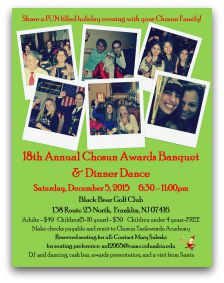
18th CHOSUN Annual Awards Banquet
& Dinner Dance

Saturday December 5, 2015
6:30pm - 11:00pm
Black Bear Golf Club
138 Rt. 23 N. Franklin, NJ 07416

Get into the holiday spirit and join your fellow Chosun students and families for an evening of celebration and goodcheer for the whole family! This annual event is a time to take a moment to reflect on the past year and recognize the efforts and dedication of the Chosun family. Invitations were sent out in the October invoices and are available at the dojang. Please invite family and friends and make this a night to remember! RESERVED SEATING FOR ALL...
Contact Mary Suleski at:
md2065@cumc.columbia.edu.

NEW THIS YEAR... A silent auction of goods and services to offset the cost of new training equipment for the NEW dojang!

Click image to join event on facebook


Read entire newsletter...

Thursday, July 2, 2015

Chosun e-newsletter Archive Volumn 6 #7 July, 2015

Dojang News and Events
CHOSUN SUMMER 2015:

Chosun Taekwondo Training in the Park and Special Summer Programs
Spend four summer Sunday mornings training against the backdrop of nature in the
beautiful surroundings of the Warwick Town Park and take advantage of special summer programs at CHOSUN for the whole family! Classes are no extra charge and are open to other martial artists. Some of the highlights are:
  • Asian Arts and Crafts for Youth Training students 
  • Traditional Taekwondo Knife, Pistol and Club Self-Defense Drills 
  • Mindful Meditation & QiGong Practice
  • Full Moon Poomsae Practice at Lewis Park 
  • Bring-A-Friend Days(adults, teens and children) 
  • Taekwondo History Night
The full schedule of events is available on the Events calendar on the Chosun website

Chosun e-newsletter Archive Volumn 6 #6 June, 2015


Dojang News and Events
Chosun Belt Promotion Test
May 17, 2015

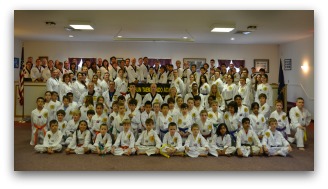
The Warwick Town Hall was packed with spectators and Chosun students at the recent May Belt Promotion Test. Skill and spirit were on display as students demonstrated their techniques. Congratulations to Chosun students on your achievements and Kamsahamnida for your dedication to traditional taekwondo and the Chosun Taekwondo Academy.
Click image for more photos
View a video montage


Read entire newsletter....